




Risk Discovery
Identifying What Could Stand in the Way of Your AI Initiative
Risk discovery is the process of identifying potential problems that could prevent an AI initiative from achieving its intended outcomes.
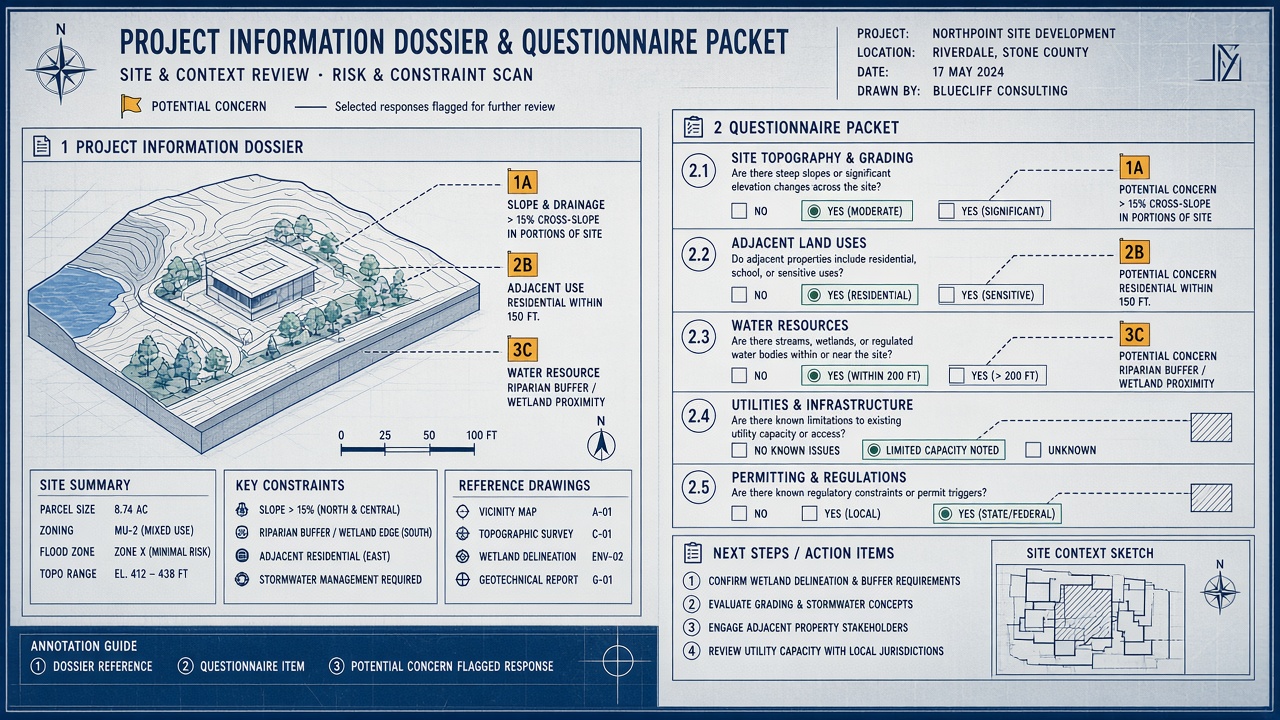
Within the AI Project Risk platform, discovery begins with the project information and questionnaire responses you provide. Our assessment agents examine that snapshot for conditions, dependencies, and unanswered questions that may indicate a risk.
The purpose is not to produce a list of everything that can go wrong with AI. It is to identify potential concerns that are relevant to the initiative you have described.
What Are We Looking For?
Risk discovery looks for issues that are relevant to the initiative as described, not for a generic catalogue of AI problems.
Conditions That Could Interfere With Expected Outcomes
A project’s reported arrangements may reveal a possible obstacle to success. For example, an initiative may aim to reduce staff workload while requiring employees to review every AI-generated result. That does not establish that the initiative will fail, but it raises a relevant question: has the expected benefit accounted for the review effort?
Dependencies That May Be Overlooked
An AI capability may depend on processes outside the model itself, such as keeping information current, obtaining approvals, or handling exceptions. If an assistant relies on frequently changing policies, its usefulness depends partly on how those changes reach it. Risk discovery considers these dependencies where the supplied information makes them relevant.
Gaps or Inconsistencies in the Project Description
Responses may leave an important arrangement unclear or appear to describe it differently. For example, one response may describe an agent as advisory, while another says it automatically updates business records. That difference warrants clarification because the two activities involve different exposures.
An unclear answer is not proof of a project defect. It may indicate that more information is needed before a concern can be assessed confidently.
Looking Across Connected Areas
Potential risks do not always fit neatly into one category.
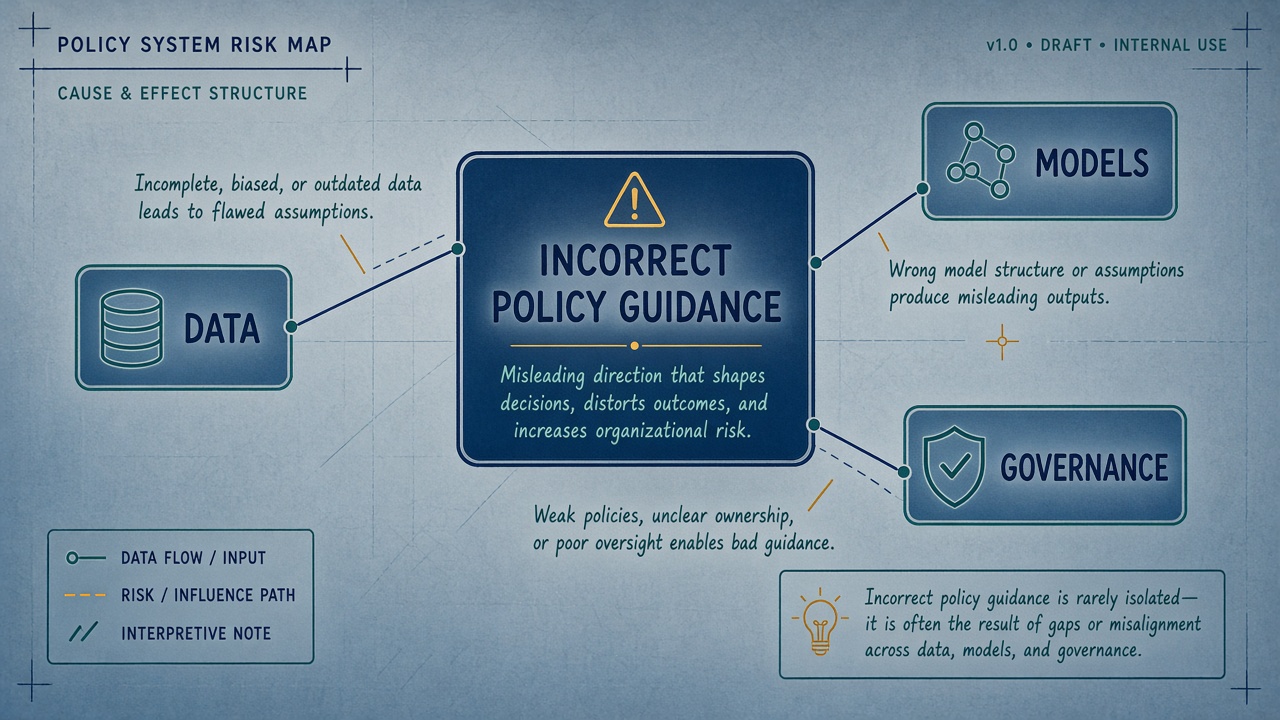
A concern about inaccurate outputs might involve the information available to the agent, the way its performance is evaluated, and the human review process. Our agents consider connections across Strategy, Governance, Data, Models, and Execution rather than treating each area as isolated.
This helps surface concerns that may be less apparent when individual project arrangements are considered separately.
Recognizing Risks Your Team Already Knows About
Risk discovery is not limited to finding something entirely new.
Where you describe known risks and existing responses, the assessment considers that context. A concern may already be addressed, remain partly unresolved, or depend on a measure that is planned but not yet implemented.
Recognizing your team’s existing work helps avoid presenting an acknowledged issue as a new discovery.
A Potential Risk Is Not a Confirmed Failure
Our agents identify potential risks from the information you supply. They do not directly inspect your implementation or independently verify that a failure has occurred.
A useful discovery therefore explains what raised the concern and what remains uncertain. Where information is insufficient, the appropriate result may be a clarification need rather than a definite risk finding.
Risk discovery provides a focused starting point for understanding possible weaknesses in the reported project snapshot. It does not guarantee that every risk has been identified.
- Starts from the project snapshot you provide
- Looks for relevant conditions, dependencies, and gaps
- Considers connections across Strategy, Governance, Data, Models, and Execution
- Treats a potential concern as a starting point, not a confirmed failure