





Customer Request
Describe the AI Initiative You Want Assessed
The customer request is the information you submit to begin an AI Project Risk assessment. It combines basic details about your initiative with responses to questions designed to clarify its purpose, current condition, and supporting arrangements.
Together, these inputs form the project snapshot our assessment agents analyze. Clear, relevant responses help us produce findings that relate to your initiative rather than general observations about AI.
Your request should describe one identifiable initiative as it stands at the time of submission.
Basic Information About Your Project
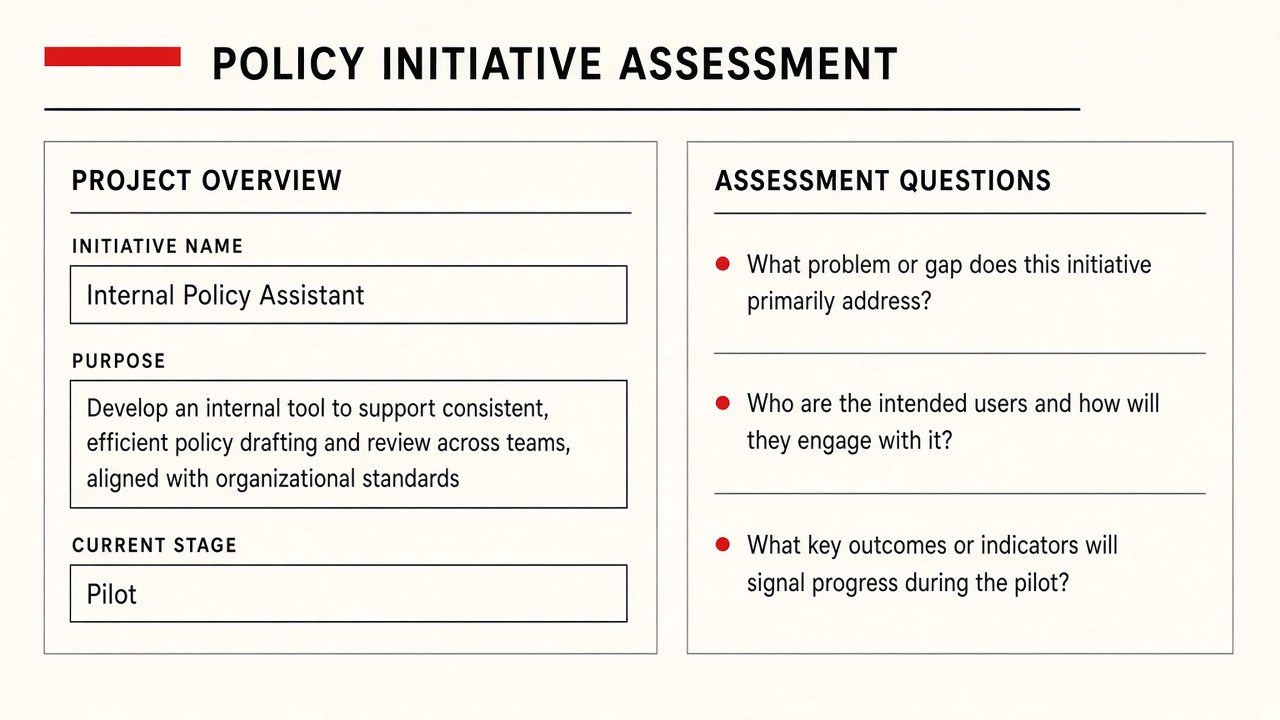
The project overview establishes what your initiative is intended to accomplish and where it currently stands.
Purpose and Description
Explain the business problem or opportunity, what the AI solution is expected to do, and who will use or be affected by it. Describe the intended capability in practical terms. For example, “Help support staff find relevant answers to customer enquiries” is more informative than “Improve service through AI.”
Current Stage and Activities
Describe whether the initiative is being explored, developed, tested, implemented, or improved after deployment. Include a brief explanation of the work currently underway. Distinguish capabilities already available from those still being planned.
Expected Outcomes and Measures
State the outcomes the initiative is intended to deliver and the key performance indicators used to measure progress. Where possible, explain what a measure represents. “Successful completion without manual correction” provides more context than a percentage labelled only as “accuracy.” If measures have not yet been established, make that clear rather than supplying an assumed target.
Responses to the Assessment Questions
The questionnaire adds context that a project summary alone may not provide.
Questions explore relevant arrangements across Strategy, Governance, Data, Models, and Execution. Your responses help clarify how the initiative is organized, what it depends on, and where there may be limitations or uncertainty.
Answer in relation to the specific initiative—not only your organization’s general policies or intentions. An organization-wide practice may be relevant, but it is important to explain whether it applies to this project.
What Makes a Response Useful?
Describe What Happens in Practice
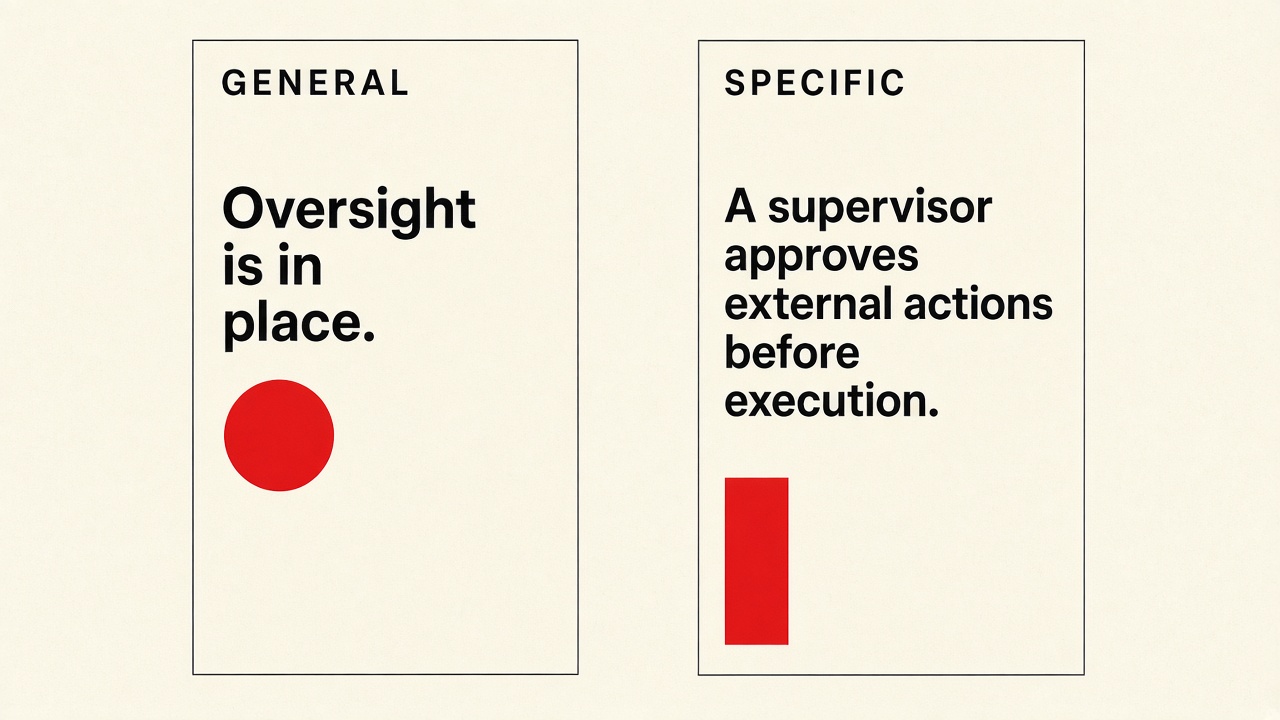
Where you can, explain how an arrangement operates rather than simply confirming that it exists. For example, “A team member approves each proposed record change before it is applied” is more informative than “Human oversight is in place.”
Separate Current Arrangements From Plans
Identify whether a measure is implemented, planned, or still under consideration. This helps prevent a future commitment from being interpreted as a capability already supporting the initiative.
Make Uncertainty Visible
If you do not know an answer, say so. If a question does not apply, explain that briefly where helpful. An unknown response is more useful than an unsupported assurance. It allows the assessment to acknowledge its limits and identify where clarification may matter.
Include Relevant Problems and Existing Measures
Where applicable, describe known limitations and what your team has already done or planned to address them. This context helps the assessment recognize existing work and avoid treating an acknowledged concern as an entirely new discovery.
Provide Context Without Sharing Sensitive Material
You do not need to submit detailed technical specifications, source code, credentials, or actual customer records.
Focus on the initiative’s purpose, activities, and working arrangements. Use general descriptions where names or sensitive details are unnecessary, and follow your organization’s information-sharing requirements.
If a relevant detail cannot be disclosed, state the limitation rather than substituting an inaccurate answer.
Review Your Snapshot Before Submitting
Check that your responses:
- Refer to the same initiative and point in time
- Distinguish what exists from what is planned
- Explain important terms or measures
- Identify uncertainty honestly
- Avoid unnecessary confidential information
The quality of the request shapes the specificity of the assessment. More text is not necessarily better; clear descriptions of the relevant conditions are what make the snapshot useful.