




Framework
A Structured View Across the AI Project Lifecycle
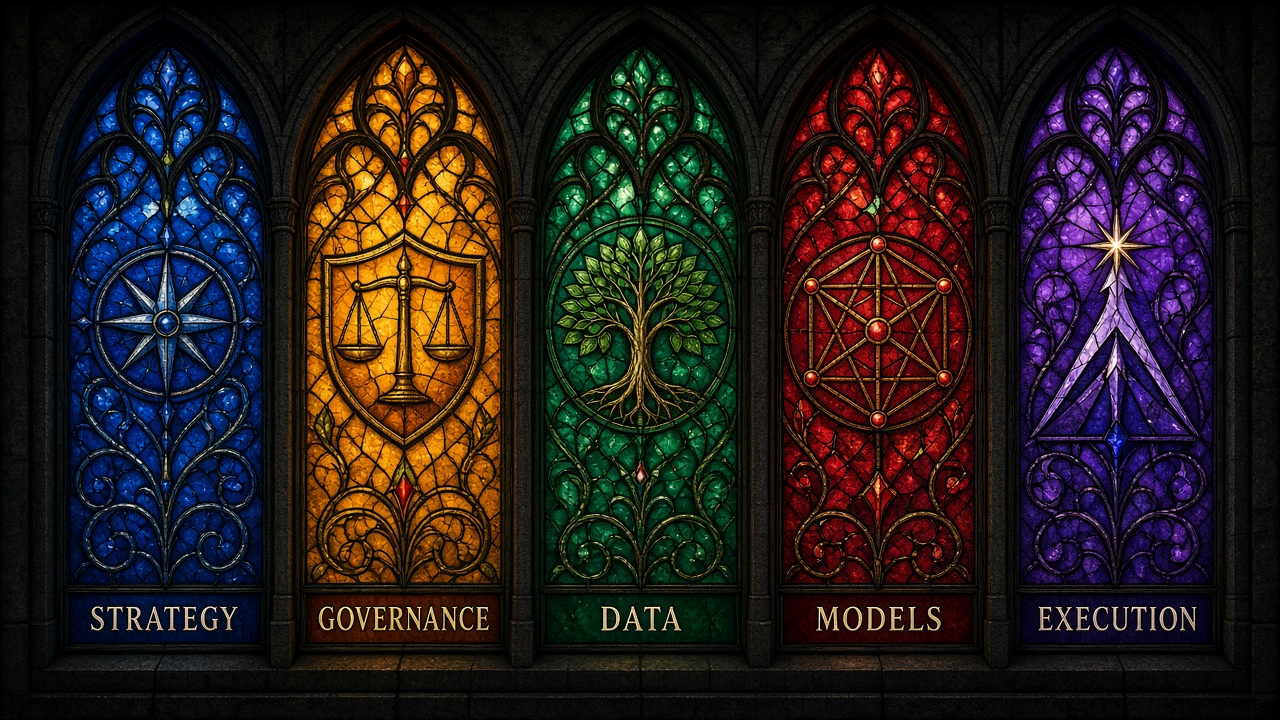
The WorkforceAI Framework is a structured methodology for evaluating AI initiatives across five lifecycle stages—Strategy, Governance, Data, Models, and Execution—to identify hidden risks and cross-stage dependencies that may impact outcomes.
This framework is designed to provide a consistent and connected view of how AI projects progress, where risks originate, and how they evolve across stages.

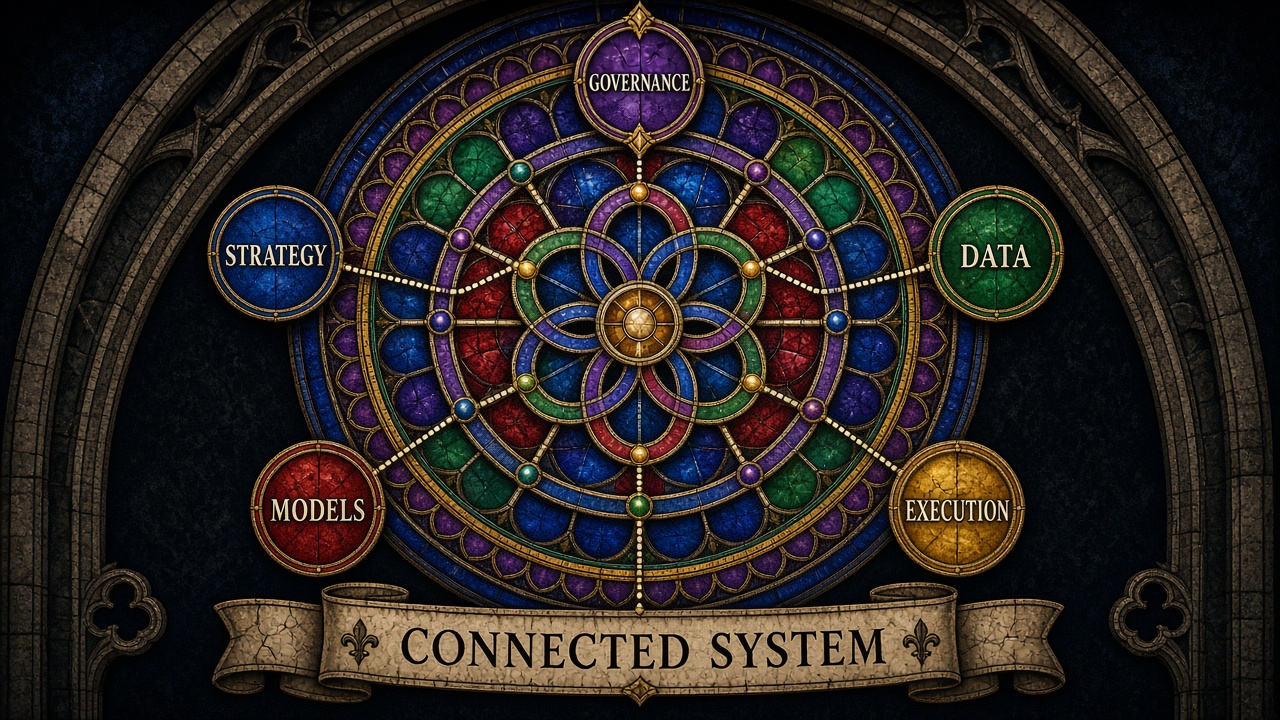
AI Project Lifecycle Stages
Strategy
Defines the business objectives, scope, and expected outcomes of the AI initiative.
Governance
Establishes oversight, accountability, and decision-making structures.
Data
Evaluates data availability, quality, lineage, and readiness for use.
Models
Assesses feasibility, assumptions, and validation approaches.
Execution
Covers deployment, integration into workflows, and adoption.
The framework evaluates each stage not as an isolated checkpoint, but as part of a continuous system where outputs from one stage influence the next. The same five areas also structure the pillar stages used in the assessment.
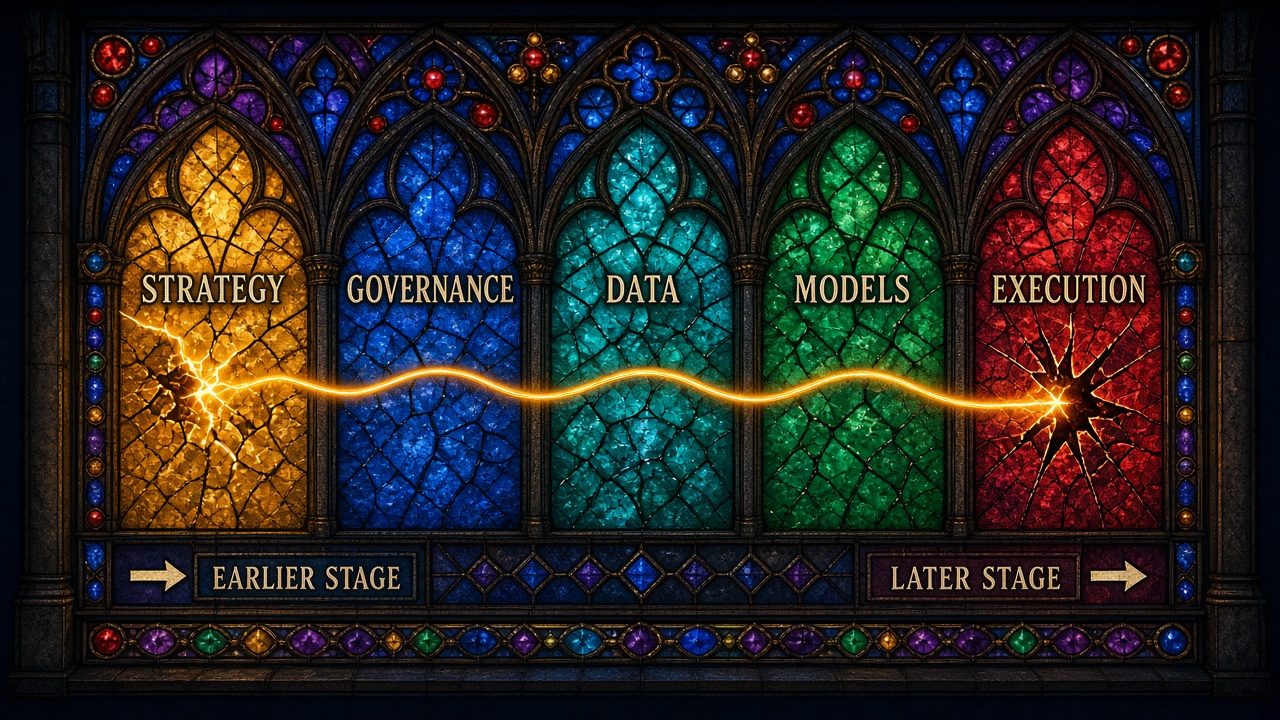
Risk Accumulates Across Stages
Cross-Stage Risk Dynamics
Risks in AI projects are rarely isolated within a single stage. They often originate earlier and become visible only later.
- Strategy misalignment may appear as execution delays
- Data limitations may invalidate model assumptions
- Governance gaps may surface during audit or compliance review
The framework identifies these cross-stage dependencies to surface risks earlier in the lifecycle.
How the Framework Evaluates AI Projects
Key Evaluation Dimensions
Structural Alignment
Ensures consistency between business goals, technical execution, and constraints.
Operational Readiness
Assesses whether teams, tools, and processes can support delivery.
Data Integrity
Evaluates completeness, reliability, and traceability of data.
Decision Validity
Identifies whether key assumptions are explicit and tested.
Dependency Exposure
Surfaces risks created by reliance on upstream or parallel activities.
These dimensions are applied across all lifecycle stages to detect patterns of misalignment or fragility.
Designed for Limited Visibility Environments
Fragmented Visibility Across Teams
AI initiatives typically involve:
- Distributed teams
- Varying levels of AI expertise
- Shared ownership across stages
No single stakeholder has complete visibility.
The framework synthesizes inputs across roles and stages to identify inconsistencies and highlight areas where confidence may be overstated or unsupported.
From Inputs to Structured Risk Signals
Input Analysis Approach
The framework analyzes:
- Responses to targeted project questions
- Stage-specific conditions and constraints
- Alignment across stakeholder inputs
Risk Signal Outputs
This produces structured risk signals such as:
- Indicators of potential delay or rework
- Early signs of investment inefficiency
- Misalignment between expected and likely outcomes
These are signals—not assumptions—derived from the interaction of multiple factors.
Lifecycle Risk Overview
Stage-Level Risk Patterns
Strategy
Risk of unclear or conflicting objectives.
Governance
Risk of undefined accountability or decision ownership.
Data
Risk of missing lineage, incomplete datasets, or low data quality.
Models
Risk of unrealistic assumptions or insufficient validation.
Execution
Risk of integration gaps and low adoption.
This overview highlights where risks typically emerge but does not replace detailed assessment.
Not a Checklist — A Connected System
System-Level Evaluation
The WorkforceAI Framework treats an AI initiative as a connected system rather than a checklist.
- Decisions in one stage influence outcomes in others
- Risks can compound across stages
- Isolated assessments often miss these interactions
The framework identifies these compound effects to provide a more accurate view of project risk.
Why This Framework Matters
Practical Value
- Surfaces hidden risks earlier in the lifecycle
- Reveals cross-stage dependencies
- Provides a structured basis for executive decision-making
This enables more informed decisions before risks translate into delays, cost overruns, or project failure.