




Banks & Credit Unions
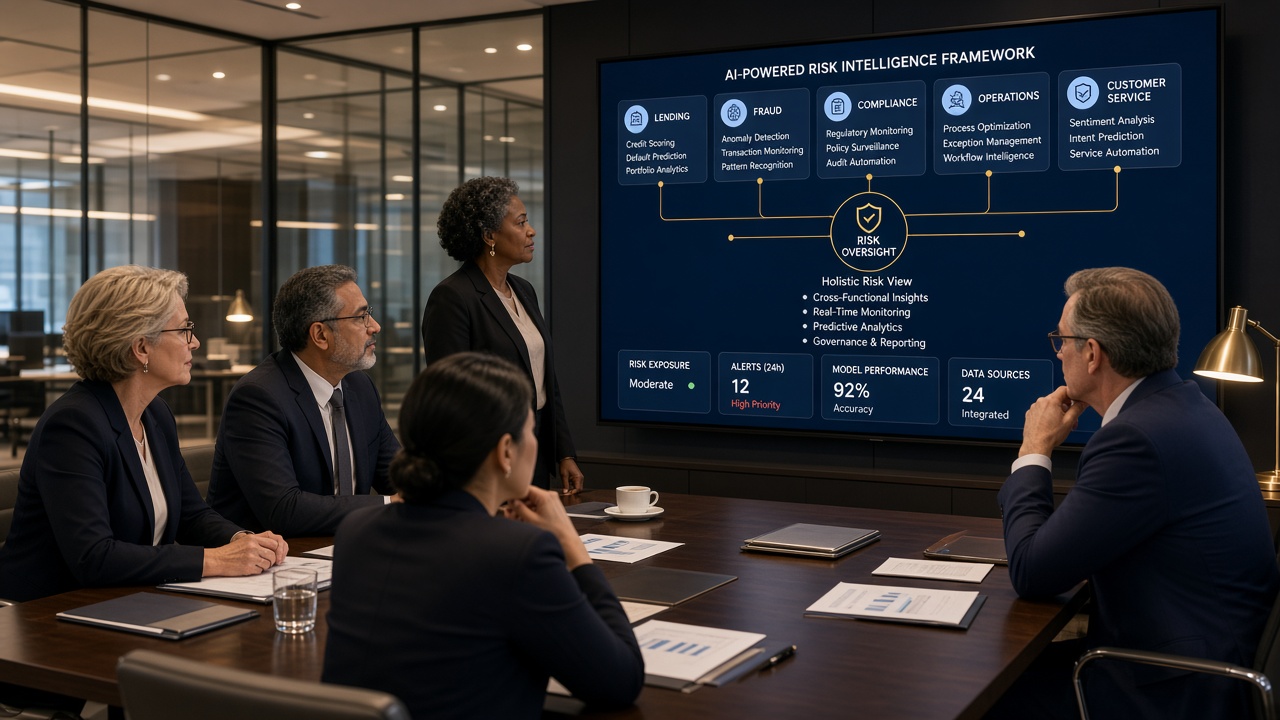
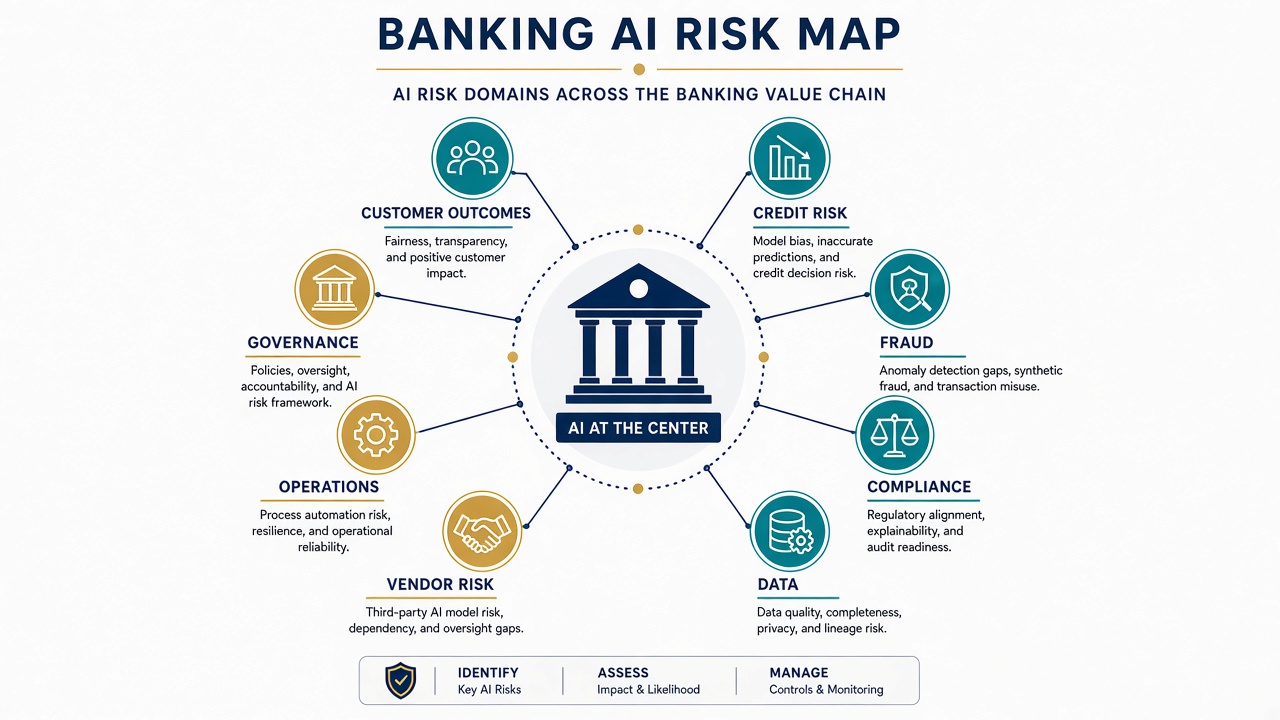
Banks and credit unions are adopting AI across lending, fraud, compliance, customer service, operations, collections, marketing, and internal productivity. These projects can improve efficiency and decision quality, but they can also create new exposure across data use, customer outcomes, model behaviour, vendor reliance, operational controls, and regulatory scrutiny.
AI Project Risk helps banks and credit unions assess active AI projects already in pilot, procurement, implementation, or production. We review the project’s current position across the AI Project Pillars, consider information provided by the accountable sponsor or executive, and use AI-assisted analysis with relevant benchmark references to identify areas requiring management attention.
The result is a concise, executive-ready view of the AI project’s risk position, control gaps, and practical remediation priorities.
AI Risk Assessment for Banking Environments
In banks and credit unions, AI risk is rarely confined to a single department. A project may begin as a business efficiency initiative but quickly affect credit policy, customer treatment, transaction monitoring, operational resilience, data governance, or third-party oversight.
Our assessment approach is designed for banking environments where accountability, evidence, fairness, security, and regulatory defensibility matter.
Common active AI project areas include:
- Credit underwriting and decision support
- Fraud detection and alert prioritisation
- Transaction monitoring and financial crime operations
- Collections and customer contact strategies
- Customer service chatbots and virtual assistants
- Complaint handling and case summarisation
- Marketing segmentation and next-best-action tools
- Branch, contact centre, and back-office automation
- Internal productivity tools using confidential information
- Vendor platforms with embedded AI functionality
The objective is to help management understand where AI may improve performance and where it may introduce avoidable risk.
Key Risk Questions for Banks and Credit Unions
Does the AI project affect customers or member outcomes?
We consider whether the project may influence access to products, pricing, service quality, complaints, collections activity, fraud treatment, communications, or other customer-facing outcomes.
Is decision influence properly controlled?
Where AI informs credit, fraud, compliance, operational, or customer decisions, we assess whether human oversight, challenge, documentation, and escalation are proportionate.
Is sensitive banking data appropriately protected?
Banking AI projects often rely on customer records, transactional data, account information, behavioural data, credit files, employee data, or confidential business information. We identify where data exposure, retention, access, or vendor use may require closer attention.
Are vendor and embedded AI risks visible?
Many banks and credit unions encounter AI through third-party platforms rather than internally built models. We review whether the institution has sufficient visibility into vendor AI functionality, model changes, data handling, subcontractors, resilience, and contractual protections.
Can the project withstand governance scrutiny?
We assess whether the project can be clearly explained to senior management, risk committees, internal audit, regulators, or the board: what it does, who owns it, what evidence supports it, what controls operate, and what remains unresolved.
Relevant Banking Risk Areas
AI Project Risk can support banks and credit unions across several risk and control domains.
Lending and Credit
Assessment of AI projects supporting underwriting, affordability checks, credit scoring, portfolio monitoring, collections, customer segmentation, or credit operations.
Fraud and Financial Crime
Review of AI used for alert triage, suspicious activity detection, transaction monitoring, fraud scoring, sanctions screening support, case prioritisation, or investigation workflows.
Customer Service and Conduct
Assessment of chatbots, call centre tools, customer communication assistants, complaint handling tools, and AI-supported servicing workflows.
Operations and Resilience
Review of AI projects embedded in payment operations, reconciliations, exception management, document processing, reporting, branch support, contact centres, and back-office automation.
Third-Party and Technology Platforms
Assessment of AI functionality introduced through core banking systems, regtech platforms, fraud vendors, CRM tools, cloud AI services, analytics providers, and productivity software.
Executive Outputs
Typical outputs for banking clients include:
- Banking AI Project Risk Summary
- Customer and Member Outcome Risk Observations
- Credit, Fraud, Compliance, or Operational Risk Findings
- Data and Confidentiality Risk Indicators
- Vendor and Embedded AI Risk Notes
- Governance and Accountability Observations
- Control Gap and Evidence Review
- Benchmark Reference Summary
- Priority Management Actions
- Remediation Roadmap
- Committee Briefing Summary, where required
These outputs help executives decide whether an active AI project is sufficiently controlled, requires remediation, should be escalated, or needs stronger evidence before wider use.
Benchmark and Supervisory References
Where relevant, observations may be informed by banking-focused risk and governance references, including model risk management principles, AI risk management frameworks, third-party risk expectations, operational resilience practices, data governance standards, consumer protection considerations, and three-lines-of-defense oversight models.
References may include SR 11-7 model risk principles, NIST AI Risk Management Framework, EU AI Act readiness considerations, OCC, Federal Reserve, FDIC, FFIEC, FCA, PRA, or other applicable supervisory expectations depending on jurisdiction and project context.
Benchmark references support structured assessment and prioritisation. They are not presented as legal advice, regulatory approval, audit assurance, or formal compliance determination.
Request an Executive Briefing
If your bank or credit union has active AI projects in pilot, procurement, implementation, or production, AI Project Risk can provide a focused assessment of exposure, controls, governance readiness, and remediation priorities.