




Executive Resources
Financial Services Industry Overview
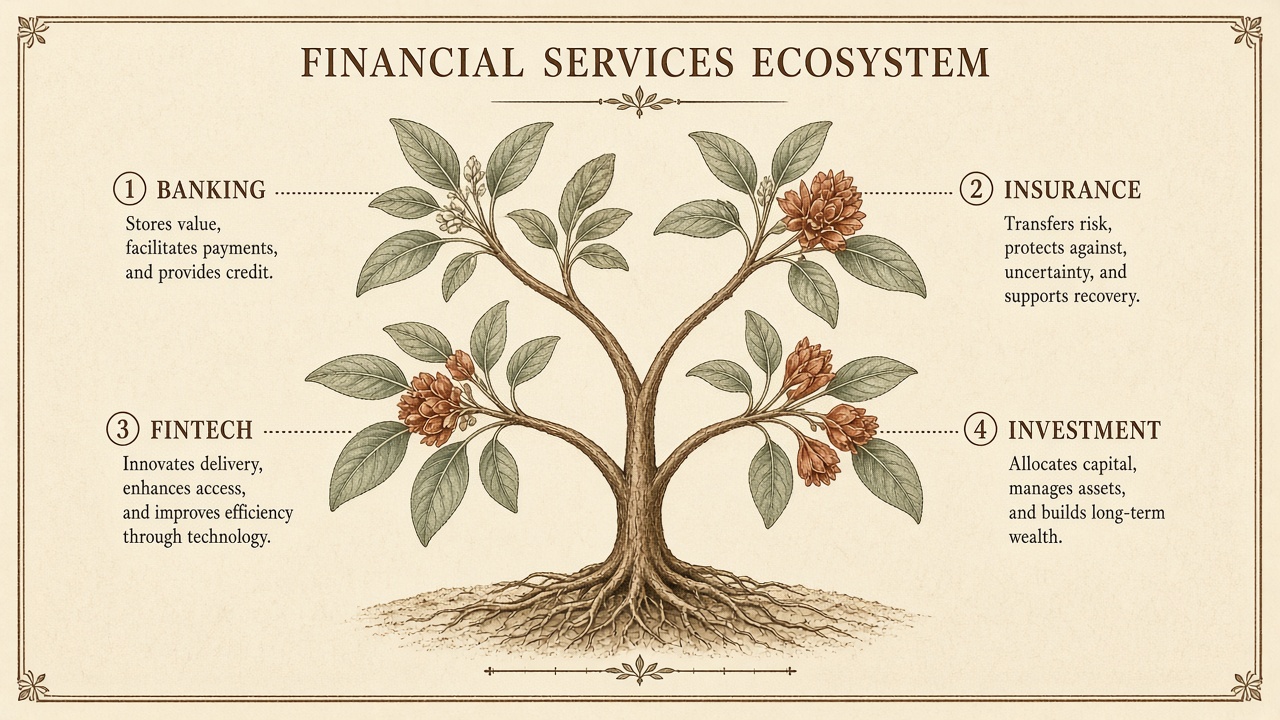
The Financial Services industry is a cornerstone of the global economy, encompassing banking, insurance, investment management, and fintech innovation.
These organizations enable capital allocation, risk management, and economic growth for individuals, businesses, and institutions worldwide. Traditional banks and insurance providers increasingly operate alongside fintech innovators, delivering new digital solutions that improve efficiency, accessibility, and financial inclusion.
Digital transformation continues to reshape the sector through mobile banking, AI-driven analytics, cloud platforms, and blockchain-based solutions. At the same time, regulatory compliance frameworks such as Basel III, GDPR, and MiFID II remain central to governance and operational discipline. Sustainability and ESG-focused investing are also gaining prominence as investors seek responsible, long-term value creation.



Key Sectors Within Financial Services
Banking & Capital Markets
Banks, credit unions, and capital market institutions provide essential services including deposits, lending, payments, investment management, and trading activities.
Digital banking platforms, AI-powered analytics, and open banking initiatives are improving transaction speed, personalization, and risk management while supporting regulatory compliance in a highly competitive environment.
Insurance
Insurance organizations manage risk across life, health, property, and casualty markets, supporting individuals and businesses against uncertainty.
Insurtech innovation is modernizing underwriting, claims processing, and policy administration. By applying data analytics and AI, insurers improve risk assessment, operational efficiency, and customer experience while expanding access to coverage.
Fintech & Digital Innovation
Fintech companies are transforming financial services through mobile payments, peer-to-peer lending, AI-driven financial planning, and blockchain-based platforms.
Collaboration between fintech innovators and traditional institutions is creating hybrid operating models that combine agility with stability, accelerating digital adoption across the financial ecosystem.
Investment & Asset Management
Investment managers and wealth advisors support capital growth through portfolio management, asset allocation, and global market strategies.
ESG and sustainable investing have become central considerations, alongside advanced analytics and market research used to manage risk, navigate volatility, and deliver long-term value.
Industry Trends & Innovations
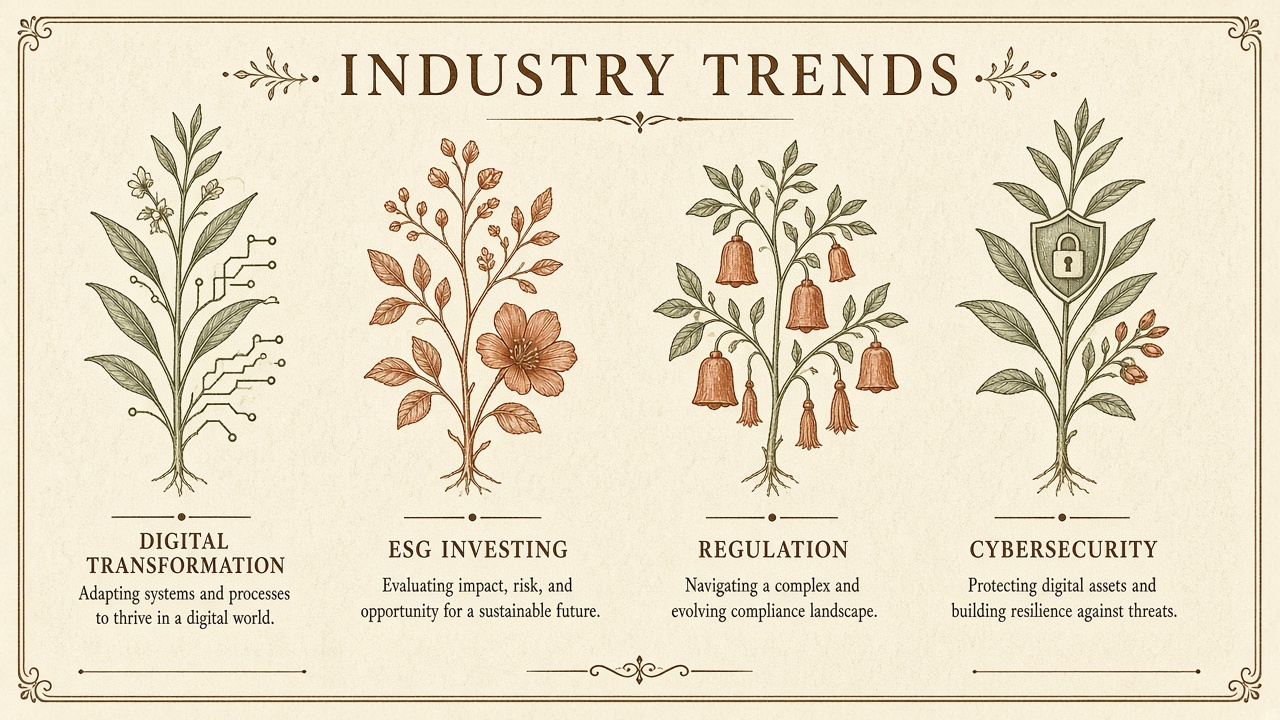
The Financial Services industry continues to evolve rapidly in response to technological advancement, regulatory change, and shifting customer expectations.
Digital Transformation
AI, machine learning, blockchain, and cloud computing improve efficiency, security, and scalability.
ESG and Sustainable Investing
Environmental and social considerations increasingly influence capital allocation decisions.
Regulatory Compliance
Global standards such as Basel III, MiFID II, and GDPR shape governance and operational controls.
Cybersecurity & Fraud Prevention
Data protection and risk mitigation are critical as digital services expand.
Challenges Facing the Financial Services Sector
Balancing innovation, operational efficiency, customer trust, and compliance remains a persistent challenge. Organizations that adopt technology strategically and manage risk proactively are better positioned to compete effectively.
- Significant investment required for technology modernization
- Complex and evolving regulatory compliance obligations
- Cybersecurity threats and increasing fraud risks
- Market volatility and macroeconomic uncertainty
Future Outlook
The future of Financial Services will be shaped by continued digital innovation, evolving customer expectations, and increasing emphasis on sustainability.
Mobile banking, AI-driven decision support, and blockchain adoption will further transform service delivery, while collaboration between incumbent institutions and fintech innovators drives hybrid operating models.
Organizations that prioritize technology, governance, and customer experience will remain resilient and well positioned for long-term growth in a dynamic global financial landscape.