




Options
Why Project Size Matters in Risk Assessment
The WorkforceAI assessment can be applied to AI initiatives of varying sizes. The options define how a project is scoped based on the number and type of stakeholders involved.
This ensures the assessment reflects the operational complexity and coordination requirements of the AI initiative.
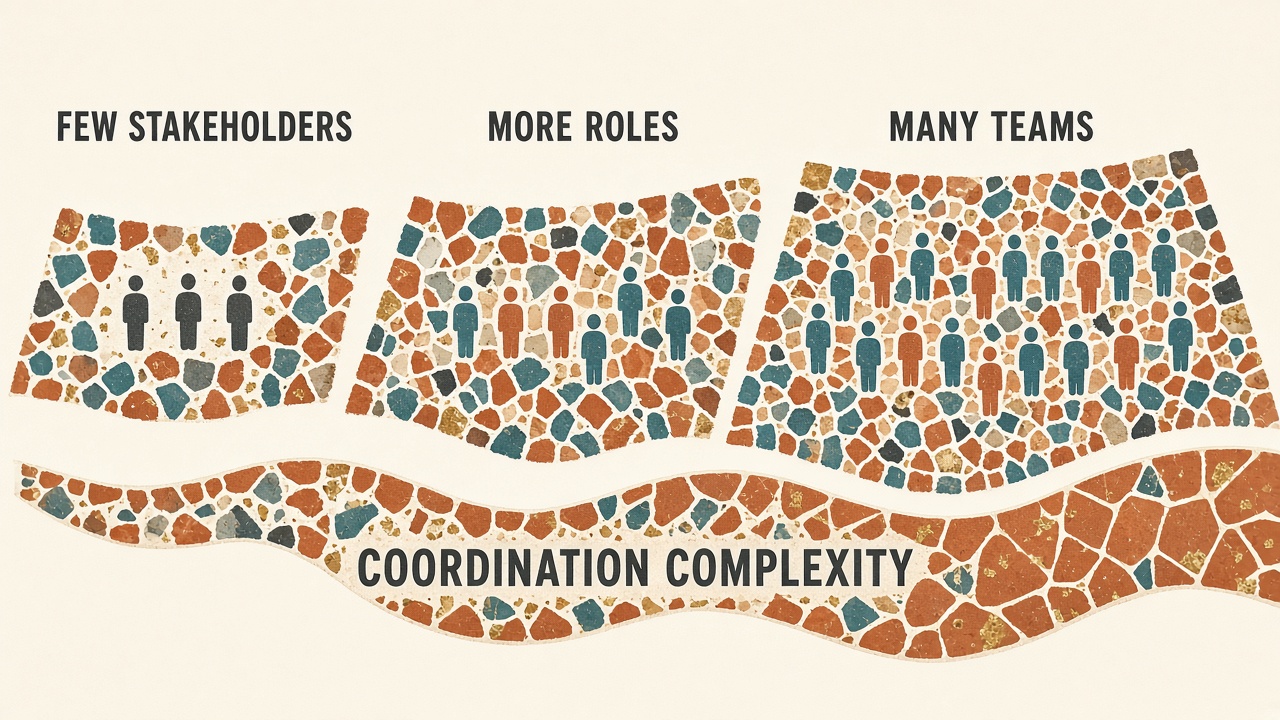
Complexity Increases with Stakeholder Involvement
AI project risk is influenced not only by technology, but by how many roles contribute to decisions and execution.
As the number of stakeholders increases:
- Dependencies become more complex
- Alignment becomes more difficult
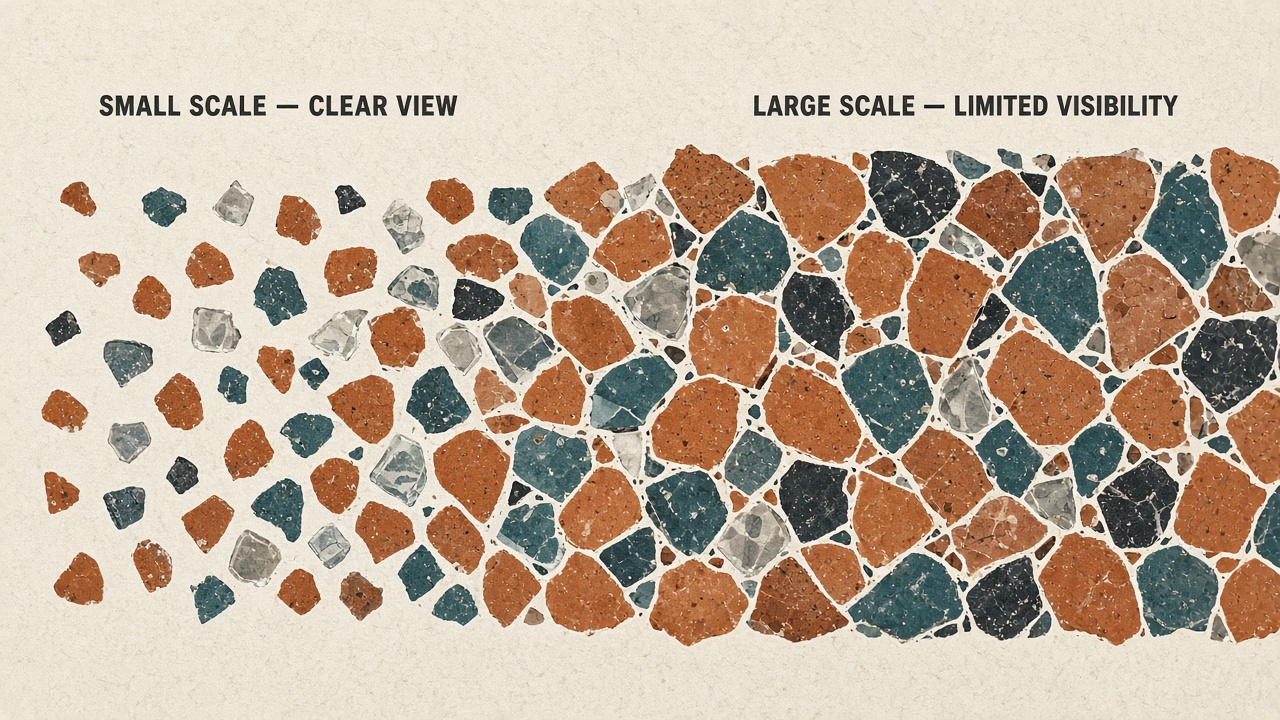
- Visibility across stages decreases
Defining Project Size Categories
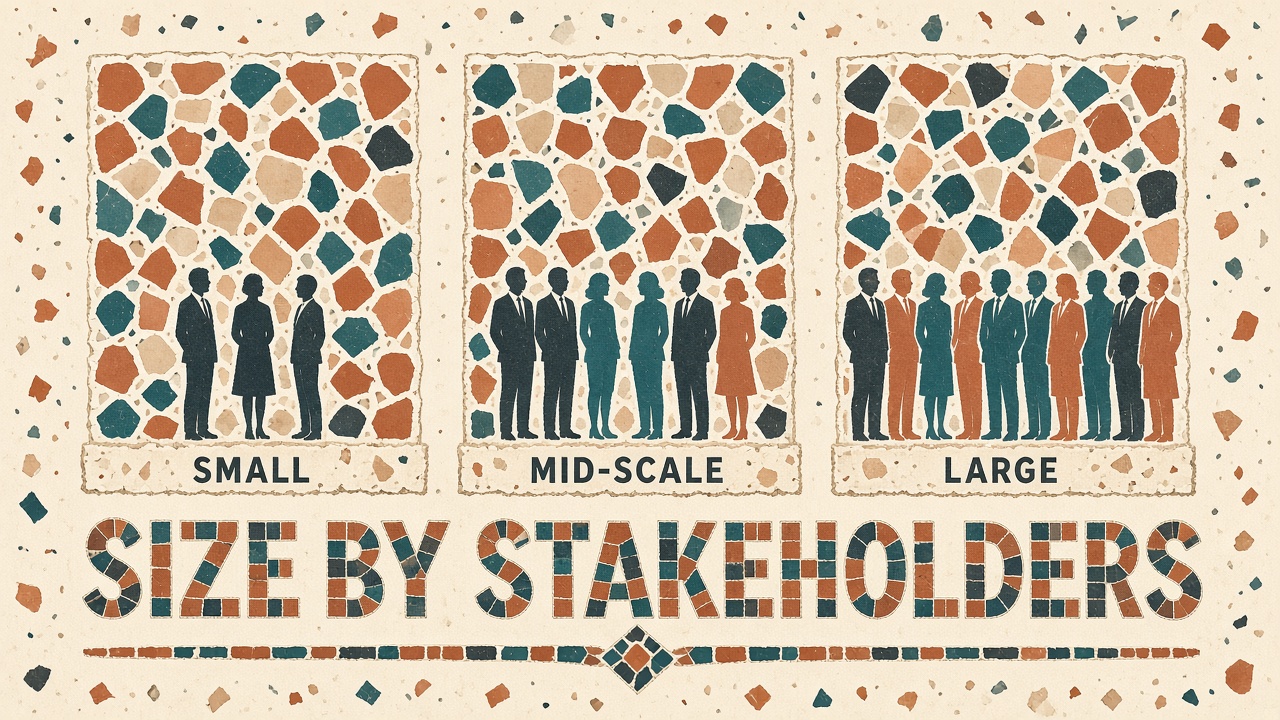
Small-Scale AI Initiatives
Typically involves:
- 1–2 executives or sponsors
- Limited technical team (e.g., data scientist, engineer)
- Minimal cross-functional dependency
Characteristics:
- Faster decision-making
- Lower coordination overhead
- Risks often concentrated in data or model feasibility
Mid-Scale AI Initiatives
Typically involves:
- Executive sponsor and multiple managers
- Cross-functional technical teams (data, engineering, analytics)
- Some governance or compliance involvement
Characteristics:
- Increased coordination across functions
- Emerging dependency between stages
- Risk begins to spread across lifecycle stages
Large-Scale AI Initiatives
Typically involves:
- Multiple executives or business units
- Several managers across functions
- Large technical teams (data, ML, engineering, operations)
- Governance, compliance, and risk stakeholders
Characteristics:
- High coordination complexity
- Significant cross-stage dependencies
- Limited visibility across teams
- Increased exposure to misalignment and delayed risk detection
Stakeholder Composition as a Sizing Factor
Role-Based View of Project Size
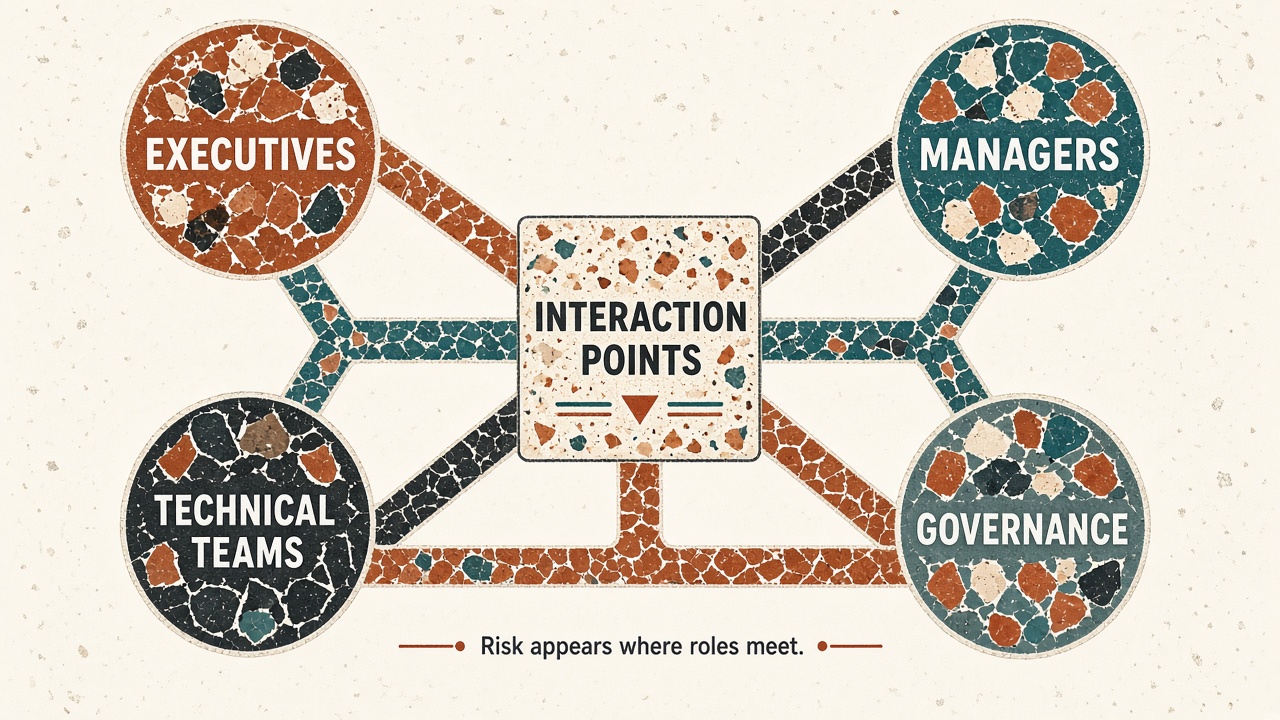
Project size is determined by the mix of roles involved:
Executives
Define direction, funding, and expected outcomes.
Managers
Coordinate execution across teams and stages.
Technical Resources
Develop data pipelines, models, and systems.
Governance and Compliance Roles
Ensure adherence to regulatory and internal standards.
As more roles are introduced, the number of interaction points increases, which directly affects risk.
Selecting the Appropriate Assessment Option
Matching Scope to Project Reality
The selected option should reflect:
- The number of stakeholders actively involved
- The diversity of roles contributing to the project
- The level of coordination required
This ensures the assessment captures relevant perspectives, actual dependencies, and realistic sources of risk.
Avoiding Under-Scoping or Over-Scoping
Under-scoping may exclude critical viewpoints, limiting visibility.
Over-scoping may introduce unnecessary complexity without additional insight.
The objective is to define a scope that accurately reflects how the project operates. The setup process then collects inputs within that scope.
Relationship Between Size and Risk Visibility
Visibility Decreases as Scale Increases
In larger AI initiatives:
- No single individual has complete oversight
- Teams operate with partial information
- Assumptions may differ across functions
This creates conditions where:
- Risks remain hidden longer
- Issues surface later in the lifecycle
- Corrective actions become more costly
Why These Options Matter
Aligning Assessment Depth with Project Complexity
By selecting the appropriate project size option:
- The assessment reflects actual operating conditions
- Risk signals are based on relevant inputs
- Cross-stage dependencies are more accurately identified
This ensures that the evaluation remains proportionate to the complexity of the initiative. The framework then analyzes those inputs as a connected system.
The scale of your AI initiative directly influences where and how risk emerges.