




Quality
Quality Means Findings You Can Understand and Use
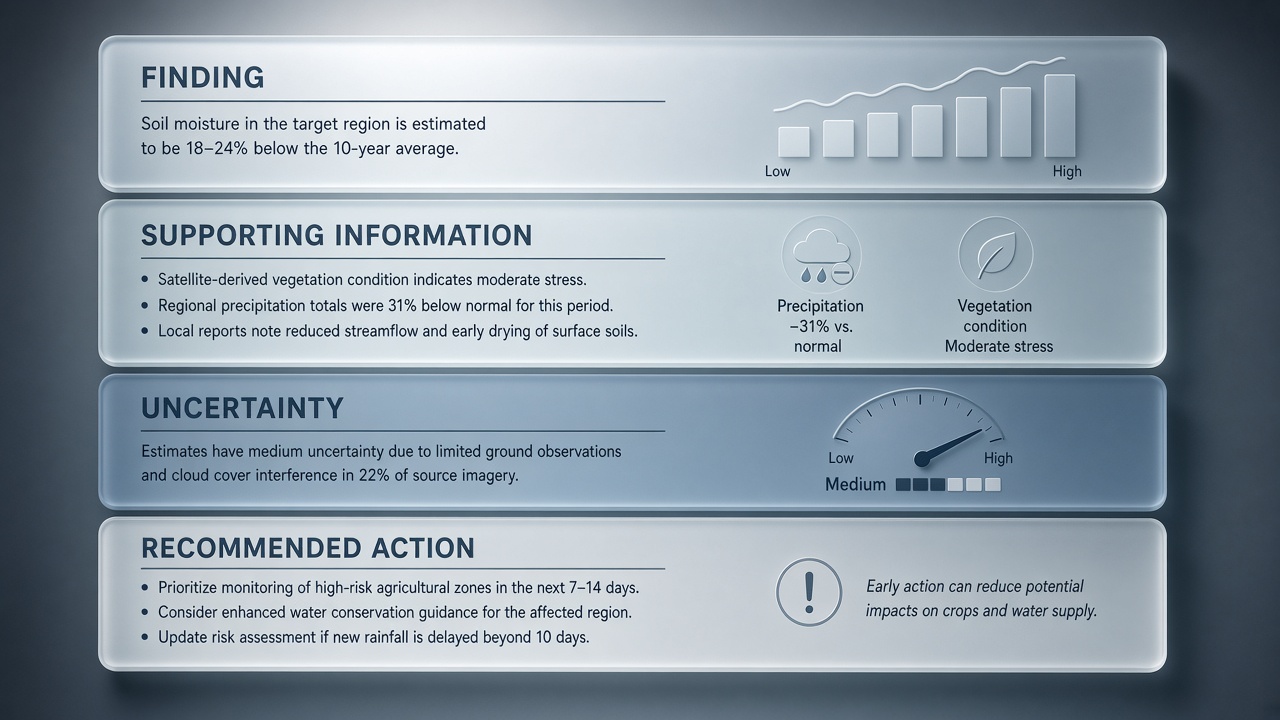
The quality of an AI Project Risk assessment depends on more than a well-presented report. Its findings should relate to your initiative, explain their reasoning, acknowledge uncertainty, and offer practical recommendations.
Quality also extends beyond delivery. You should be able to understand what a finding means, question its basis, and seek clarification where the report leaves something unclear.
Our approach emphasizes both the quality of the analysis and the help available to make sense of it.
What Makes a Report Useful?
Relevance to Your Initiative
Findings should connect to the project information and questionnaire responses you supplied—not simply repeat common warnings about AI. A useful report explains why a concern matters to your initiative’s stated purpose, current stage, or expected outcomes.
Reasoning You Can Follow
You should be able to understand how the supplied information led to a finding. The report should distinguish between what your team reported, what the assessment inferred, and what remains unknown. Missing information should not automatically be treated as proof that a process or control is absent.
Recommendations With a Clear Purpose
A recommendation should address the concern identified and explain what needs attention. Some findings call for a change. Others call for clarification or a check of an existing measure. Making that distinction helps your team avoid unnecessary work.
Honest Limits
A questionnaire-based assessment cannot independently verify your implementation or establish that every risk has been found. Quality includes stating those limits clearly and avoiding conclusions that are more certain than the available information supports.
Understanding Is Part of Quality
A technically worded finding is of limited value if the reader cannot understand its significance.
Our report interpretation guidance helps explain how to read findings, potential impacts, uncertainties, and recommendations. The aim is to make the reasoning accessible without removing important qualifications.
You should be able to distinguish between:
- A reported condition and an inferred concern
- A possible consequence and a prediction
- A missing arrangement and an unanswered question
- A recommendation to clarify something and a recommendation to change it
Questions Should Not End at Report Delivery
Questions may arise only after your team has reviewed the findings together.
You may want to ask why a concern was included, whether an existing measure was considered, or what a recommendation would involve in practice.
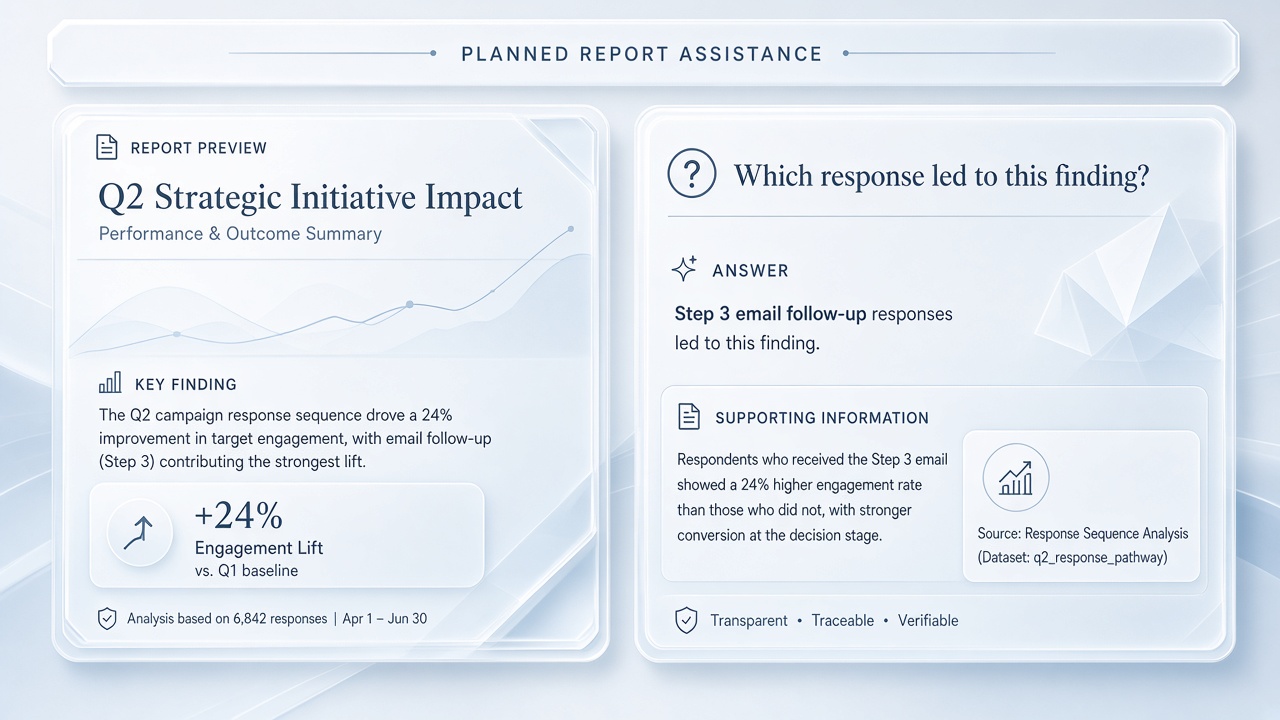
As part of our planned service enhancements, customers will be able to navigate their report online and ask a report-specific AI assistant questions. Its purpose will be to explain the assessment using the associated report and submitted information—not invent additional project details or silently revise the original findings.
Human Clarification When More Discussion Is Needed
Our planned one-on-one consultation and support will provide an opportunity to discuss questions with a knowledgeable person.
This is particularly helpful when a finding appears inconsistent with your understanding, a recommendation needs more explanation, or relevant context was not fully captured in the questionnaire.
The purpose is to clarify the reasoning and examine possible misunderstandings—not simply defend the report’s original wording.
Improvement Through Questions and Feedback
Customer questions can reveal unclear explanations, impractical recommendations, or errors in interpretation. That feedback can help improve future questionnaires, assessment guidance, and report presentation.
If a concern is raised about a finding, it is important to distinguish an error in the assessment from new information or a project change after the snapshot.
A quality assessment should be open to scrutiny. Its value rests on how clearly and responsibly it helps you understand potential risks—not on how confidently it presents them.