




Asset & Wealth Management Companies
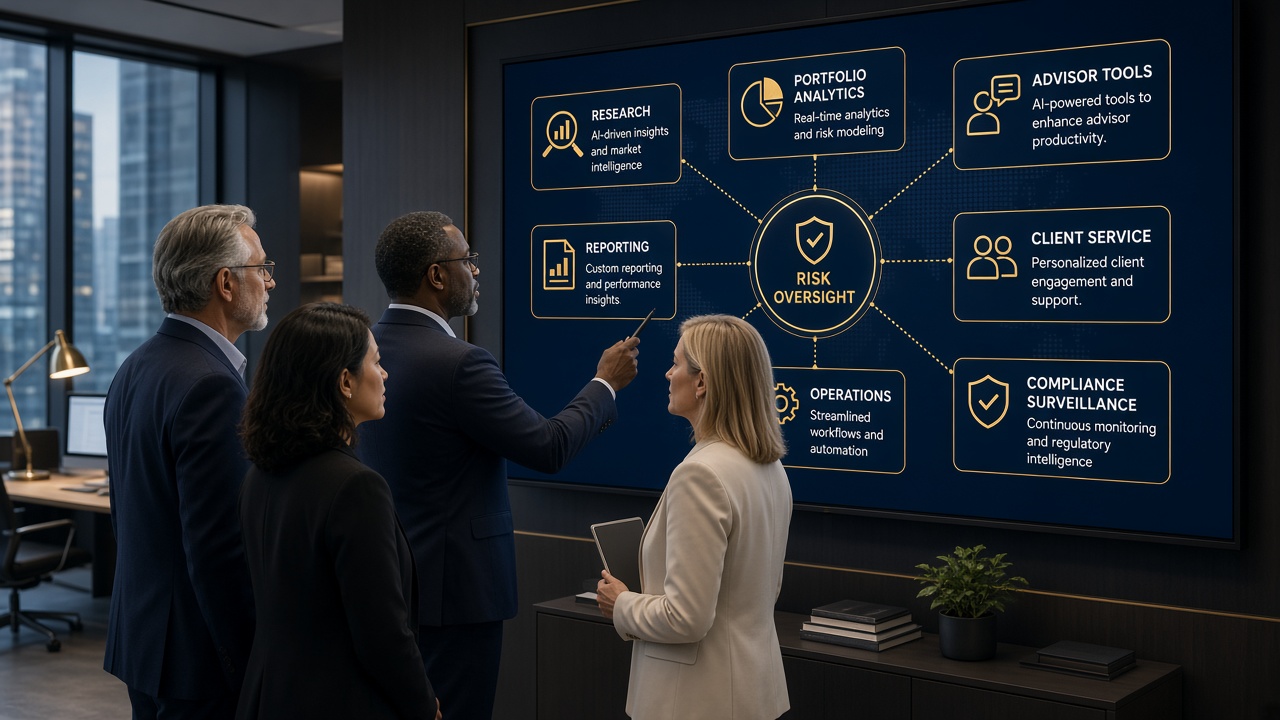
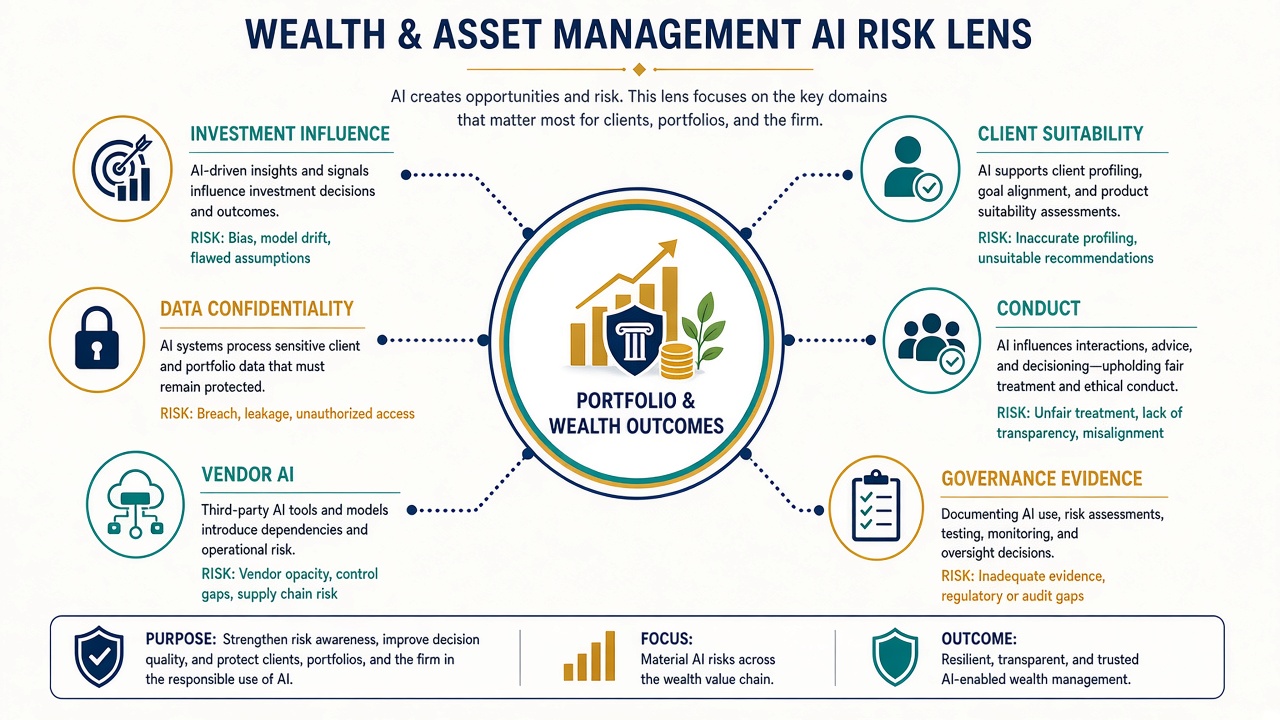
Asset and wealth managers are adopting AI across investment research, portfolio analytics, client servicing, suitability support, compliance surveillance, marketing, advisor productivity, operations, and reporting. These projects can improve scale and insight, but they may also introduce exposure around investment decision support, client communications, data confidentiality, model reliance, vendor platforms, conduct risk, and governance evidence.
AI Project Risk helps asset managers, wealth managers, private banks, advisory firms, and investment platforms assess active AI projects already in pilot, procurement, implementation, or production. We review the project against the relevant AI Project Pillars, available evidence, sponsor input, and benchmark references to identify risk signals, control gaps, and management priorities.
The result is a concise executive view of whether the AI project is appropriately controlled for its current use and whether further action is needed before broader adoption.
AI Risk Assessment for Investment and Wealth Environments
In asset and wealth management, AI may not make final investment decisions, but it can still influence research priorities, portfolio analysis, product recommendations, client communications, surveillance workflows, advisor behaviour, and operational controls.
For executives, the key question is whether the AI project supports better decisions without weakening fiduciary discipline, suitability controls, client confidentiality, market conduct, or governance oversight.
AI Project Risk supports assessment of active AI projects across areas such as:
- Investment research summarisation and idea generation
- Portfolio risk analytics and scenario support
- Client segmentation and next-best-action tools
- Suitability, advice, or recommendation support
- Advisor and relationship manager productivity tools
- Client communication drafting or personalisation
- Compliance surveillance and communications monitoring
- Trade, order, and exception review support
- Investment operations, reconciliations, and reporting automation
- Marketing content review and distribution support
- Vendor platforms with embedded AI capabilities
The assessment is designed to help management identify where AI adds value and where oversight should be strengthened.
Key Risk Questions for Asset and Wealth Managers
Could the AI project influence investment or advice-related activity?
We consider whether AI outputs may shape investment research, portfolio construction, product selection, risk commentary, client recommendations, or advisor behaviour.
Are suitability and fiduciary obligations protected?
Where AI supports client-facing or advice-related processes, we assess whether the project maintains appropriate human judgement, documentation, supervision, and escalation.
Is client and portfolio data adequately controlled?
AI projects may involve client profiles, holdings, transactions, financial objectives, risk tolerance, investment strategies, performance data, communications, or confidential research. We identify where data exposure or access controls may require closer attention.
Can users understand and challenge AI outputs?
Investment and advisory environments require professional judgement. We assess whether users can evaluate AI-generated summaries, recommendations, alerts, or analytics rather than relying on them without challenge.
Are conduct and market integrity risks visible?
Where AI supports surveillance, communications monitoring, research, trading support, or marketing, we consider whether the project could affect conduct oversight, recordkeeping, conflicts management, or market abuse controls.
Is vendor AI creating hidden dependency?
AI may be embedded in portfolio systems, CRM platforms, research tools, compliance technology, data providers, cloud services, or productivity applications. We assess whether the vendor role and related controls are sufficiently understood.
Relevant Risk Areas
Investment Research and Portfolio Support
Review of AI used for market analysis, research summarisation, portfolio monitoring, scenario analysis, risk commentary, investment screening, or decision support.
Advice, Suitability, and Client Servicing
Assessment of AI tools supporting recommendations, client segmentation, relationship manager prompts, communications, onboarding, financial planning, or servicing workflows.
Compliance and Surveillance
Review of AI used for communications monitoring, trade surveillance, exception detection, marketing review, conflicts monitoring, or regulatory reporting support.
Operations and Reporting
Assessment of AI embedded in reconciliations, performance reporting, document processing, account maintenance, workflow automation, and management information.
Third-Party Investment Technology
Review of AI capabilities introduced through data providers, research platforms, portfolio management systems, CRM tools, regtech providers, and cloud or productivity platforms.
Executive Outputs
Typical outputs for asset and wealth management clients include:
- Investment Management AI Project Risk Summary
- Investment Influence and Decision Support Observations
- Client Suitability and Conduct Risk Findings
- Data Confidentiality and Access Risk Review
- Output Reliability and User Reliance Observations
- Vendor and Embedded AI Risk Notes
- Governance and Accountability Findings
- Control Gap and Evidence Summary
- Benchmark Reference Notes
- Priority Management Actions
- Remediation Roadmap
- Committee Briefing Summary, where required
These outputs help executives determine whether an active AI project is suitable for its current use, needs stronger controls, should be limited in scope, or requires escalation before broader deployment.
Benchmark and Regulatory References
Where relevant, observations may be informed by investment management and wealth advisory governance expectations, model risk principles, AI risk management frameworks, conduct supervision, suitability requirements, market integrity controls, data governance standards, third-party risk practices, and operational resilience frameworks.
References may include the NIST AI Risk Management Framework, EU AI Act readiness considerations, model risk management principles, SEC, FINRA, FCA, ESMA, MAS, or other applicable supervisory expectations depending on jurisdiction and project context.
Benchmark references support structured assessment and prioritisation. They are not presented as legal advice, regulatory approval, audit assurance, investment advice, fiduciary opinion, or formal compliance determination.
Request an Executive Briefing
If your asset or wealth management business has active AI projects in investment research, portfolio analytics, client servicing, compliance, operations, or vendor platforms, AI Project Risk can provide a focused assessment of exposure, controls, and remediation priorities.