




Risk Report
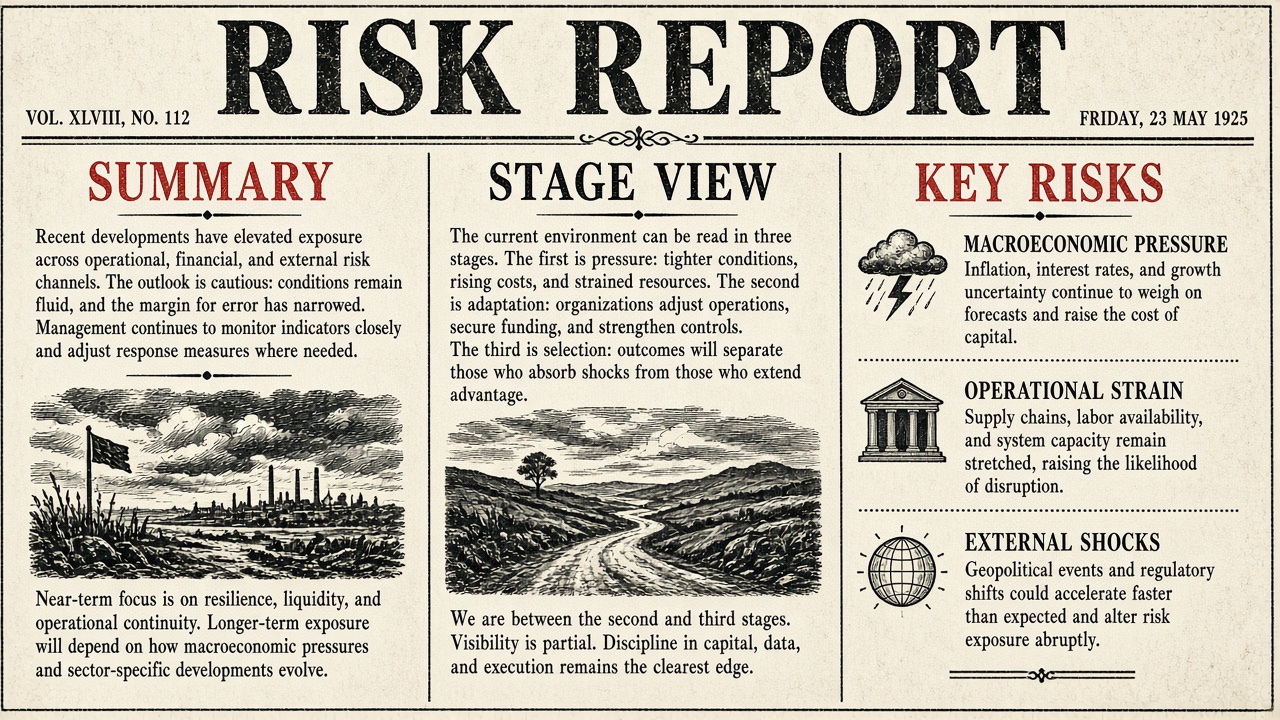
The AI Project Risk Report is the final output of the WorkforceAI assessment.
It presents identified risks in a structured, executive-ready format, enabling decision-makers to clearly understand where exposure exists and determine appropriate actions. The report follows risk mapping and is designed to support later executive decisions.
Purpose of the Risk Report
Translating Analysis into Executive Clarity
The assessment process generates multiple layers of insight.
The Risk Report consolidates these into a format that is:
- Structured
- Concise
- Focused on decision relevance
It enables executives to:
- Quickly understand key risk areas
- Identify where attention is required
- Evaluate potential impact on outcomes
Structure of the Risk Report
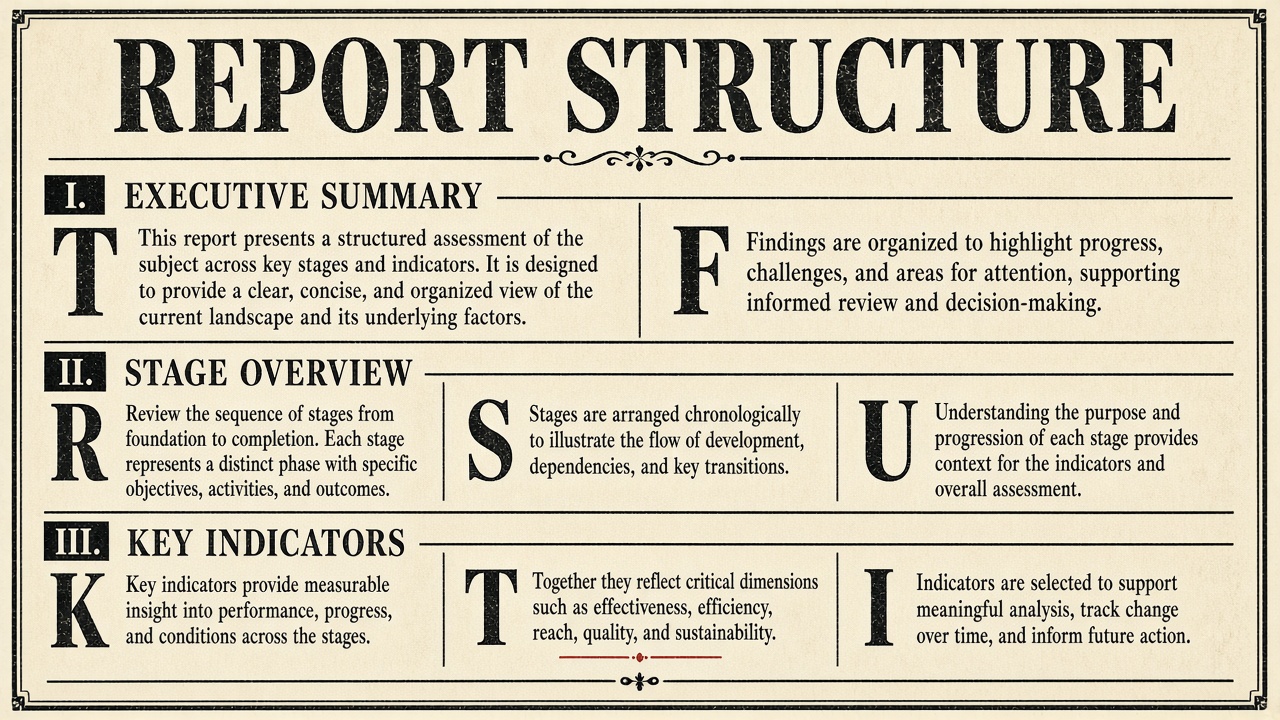
Executive Summary
Provides a high-level view of:
- Overall risk exposure
- Key areas of concern
- Notable patterns across the project
This section is designed for rapid understanding without requiring detailed review.
Risk Overview by Stage
Presents risks organized across Strategy, Governance, Data, Models, and Execution — the same stages described in the framework.
This allows executives to see where risks are concentrated and which stages require attention.
Key Risk Indicators
Highlights the most significant risk signals, including:
- Nature of the risk
- Associated stage
- Relative importance
These indicators provide a focused view of critical exposure areas.
Presentation of Risk Information
Clarity Over Volume
The report prioritizes:
- Clear articulation of risks
- Structured organization
- Minimal unnecessary detail
The objective is to avoid overwhelming the reader while preserving meaningful insight.
Contextualized Risk Descriptions
Each risk is presented with:
- A concise description
- Its position within the project lifecycle
- Its relationship to other risks
This ensures risks are understood within context, not in isolation.
Interpreting Risk Signals
Linking Risk to Potential Outcomes
The report connects risk signals to possible effects such as:
- Project delays
- Increased cost or effort
- Reduced effectiveness of outcomes
- Compliance or operational challenges
This helps executives understand why each risk matters.
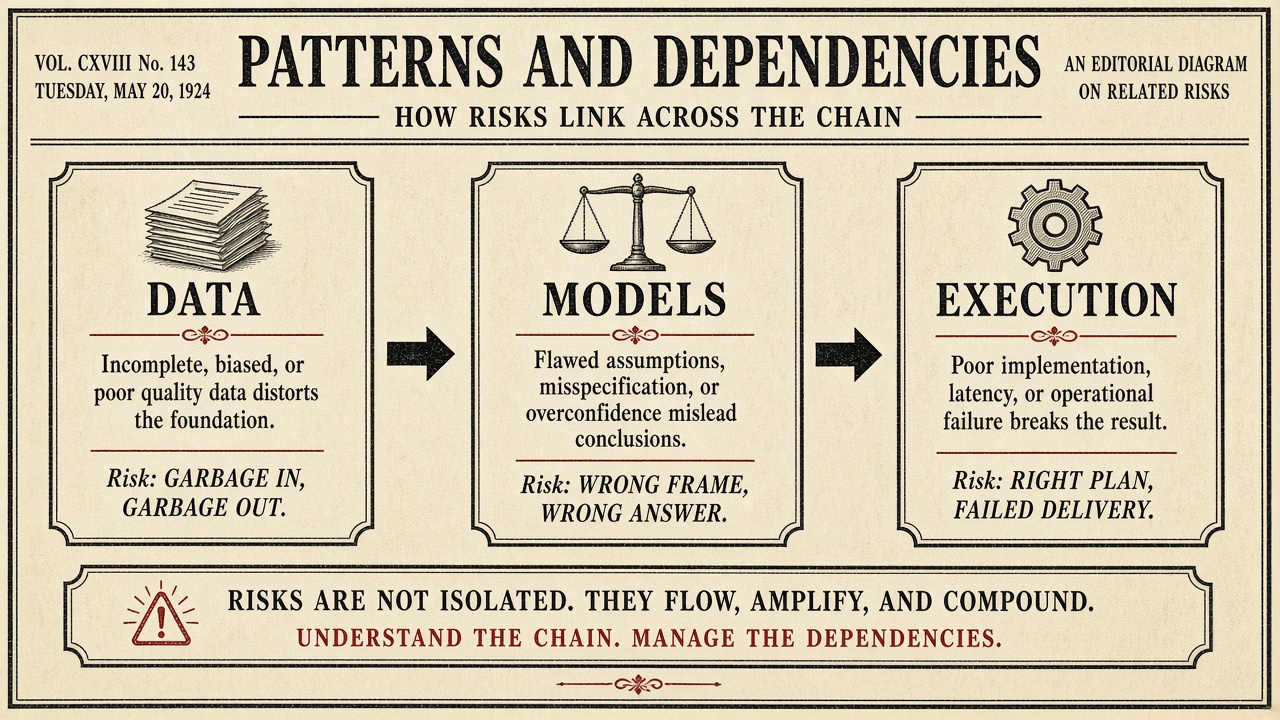
Highlighting Patterns and Dependencies
Where relevant, the report identifies:
- Clusters of related risks
- Dependencies between stages
- Recurring areas of misalignment
This supports a deeper understanding of overall exposure from the risk assessment.
Supporting Executive Decision-Making
Focus on Action-Relevant Insight
The report is designed to support:
- Prioritization of attention
- Evaluation of potential impact
- Identification of areas requiring intervention
It provides a foundation for decision-making without prescribing specific actions. Guidance on reading findings is also covered in report interpretation.
Enabling Internal Discussion
The structured format allows:
- Alignment across stakeholders
- Clear communication of risks
- More informed internal decision processes
This makes the report usable beyond the initial review.
Format and Delivery
Executive-Ready PDF
The Risk Report is delivered as a structured PDF document:
- Organized for readability
- Suitable for executive review
- Designed for internal sharing
Concise and Structured Presentation
The report avoids:
- Excessive technical detail
- Unstructured data dumps
- Overly complex visualizations
The emphasis is on clarity and usability.
What the Risk Report Does Not Do
No Prescriptive Decision-Making
The report does not:
- Make decisions on behalf of the organization
- Enforce specific actions
- Replace internal governance processes
No Assumption of Outcomes
It does not:
- Predict exact outcomes
- Guarantee project success or failure
- Replace ongoing project monitoring
The report provides visibility and structured insight, not certainty.
Why the Risk Report Matters
Converting Insight into Usable Form
Without a structured report:
- Insights remain fragmented
- Risks are difficult to communicate
- Decision-making lacks clarity
Enabling Timely Action
With the report:
- Risks are clearly visible
- Exposure is easier to understand
- Decisions can be made earlier