

Contact Us



Location
Our mailing address :
1956 Robertson Road
Suit 201
Ottawa, Ontario
Canada K2H 5B9
ASSESSMENT OUTCOME PILLARS
Assessment Pillar
- Reduce Loss Exposure
- Improve Risk Decisions
- Strengthen Governance
Outcome Focus
- Detect emerging risk signals, operational vulnerabilities, fraud patterns, and control weaknesses before they become material losses.
- Use AI-assisted analysis to prioritize risk, quantify exposure, and support faster executive decision-making.
- Maintain auditability, explainability, access controls, and regulatory alignment across AI-enabled risk workflows.
FINANCIAL SERVICES
Use Case Samples
Compliance and Anti Money Laundering (AML)
Automated systems monitor transactions and screen for regulatory infractions to reduce manual audit workloads.
Automated Loan and Credit Underwriting
Automates the mortgage and personal loan approval process by instantly verifying data.
Hyper-Personalized Risk Pricing and Underwriting
AI evaluates real time telemetry and data to dynamically price insurance premiums.
AI-driven Portfolio Rebalancing and Tax Loss Harvesting
Machine learning algorithms continuously monitor market conditions and individual portfolio rates against a client's target allocation.
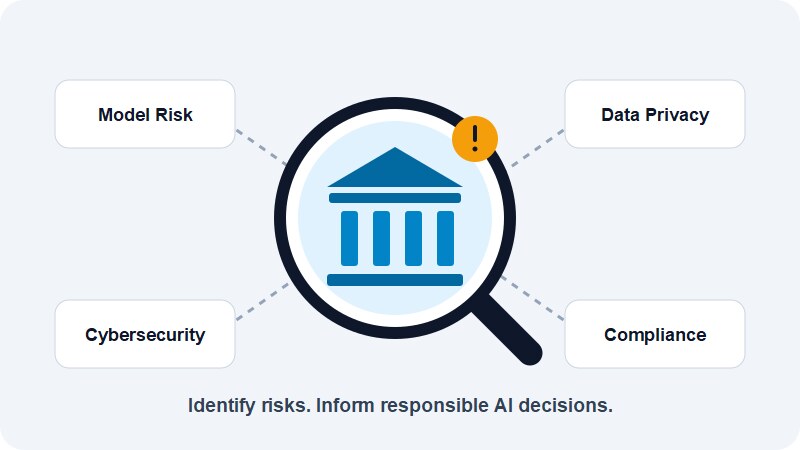
Financial Services - Risk Discovery
Financial services risk discovery identifies and assesses potential risks in AI projects used for banking, lending, payments, insurance and other financial businesses. It examines model accuracy, algorithmic bias, data privacy, cybersecurity, fraud exposure, and regulatory compliance before and throughout deployment. A structured AI risk assessment helps financial institutions prioritize controls, strengthen AI governance, and establish appropriate human oversight. Early risk discovery supports responsible AI adoption, better-informed decisions, and stronger protection for customers and financial operations.
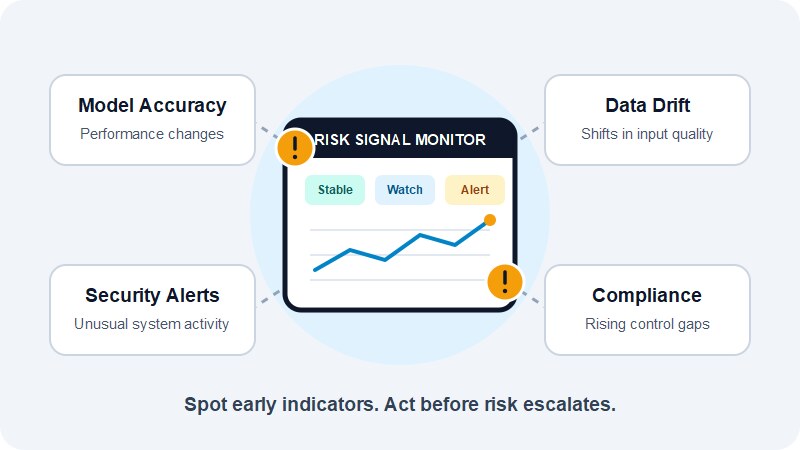
Risk Signals
Risk signals are early indicators that an AI project may face performance, security, compliance, or operational problems. Common AI risk signals include declining model accuracy, data drift, biased outputs, unusual system activity, and rising operating costs. Monitoring these indicators helps teams prioritize risk assessments, investigate emerging issues, and take corrective action. Effective AI risk monitoring strengthens governance and supports more reliable, accountable AI systems.
Regulatory Compliance
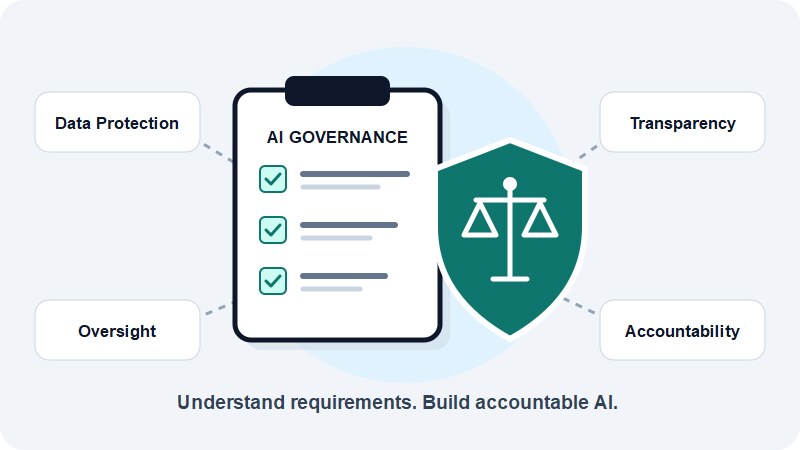
AI regulatory compliance involves identifying and meeting the legal requirements that apply to an AI system, its use, and the jurisdictions where it operates. Key considerations include data protection, transparency, fairness, security, and human oversight, with obligations varying by sector and risk classification. Documented AI risk assessments, audit trails, and ongoing monitoring help organizations demonstrate accountability and address compliance gaps. Building compliance into the AI project lifecycle supports responsible deployment and helps reduce legal and operational risk.
Governance Risks
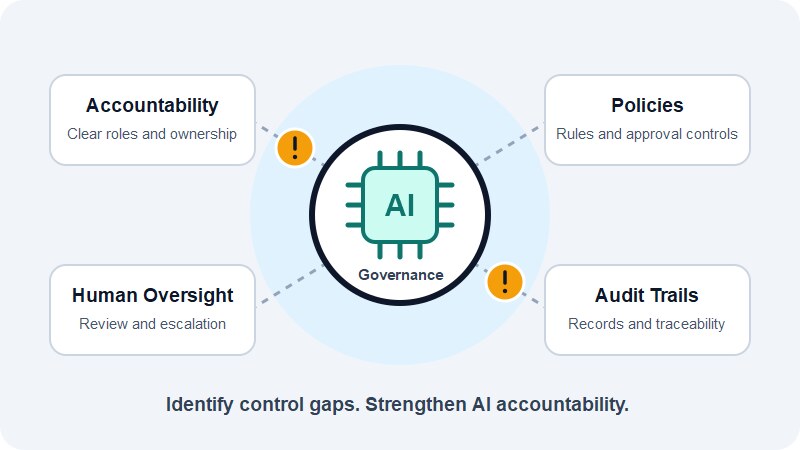
AI governance risks arise when accountability, policies, oversight, and decision-making controls are unclear or ineffective across the AI project lifecycle. Common gaps include undefined ownership, inadequate documentation, weak approval processes, and insufficient oversight of third-party AI providers. Identifying these risks early helps organizations strengthen AI risk management, establish human oversight, and support regulatory compliance. Clear responsibilities, documented controls, and ongoing monitoring promote more transparent and accountable AI deployment.
Data Risks
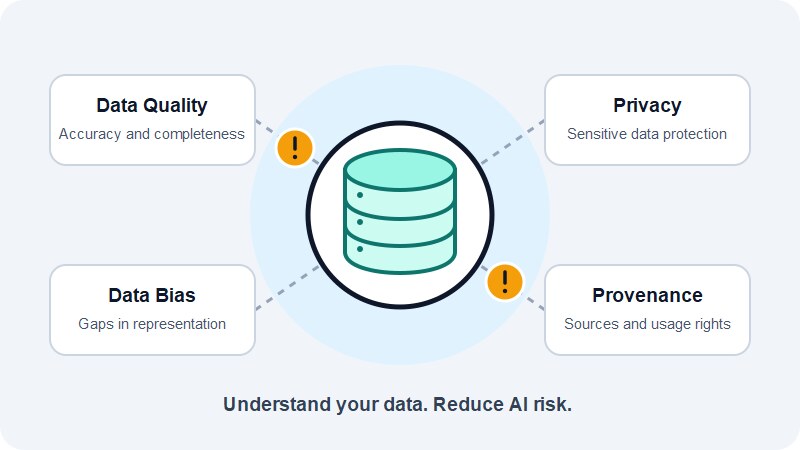
AI data risks arise when the information used to train, test, or operate an AI system is inaccurate, incomplete, biased, outdated, or inadequately protected. Common risks include poor data quality, privacy breaches, unrepresentative datasets, unclear data provenance, and unauthorized access. Identifying these issues through data risk assessments helps organizations improve model reliability, protect sensitive information, and support regulatory compliance. Strong data governance, validation, access controls, and ongoing monitoring help manage risks throughout the AI project lifecycle.
Executive Insight
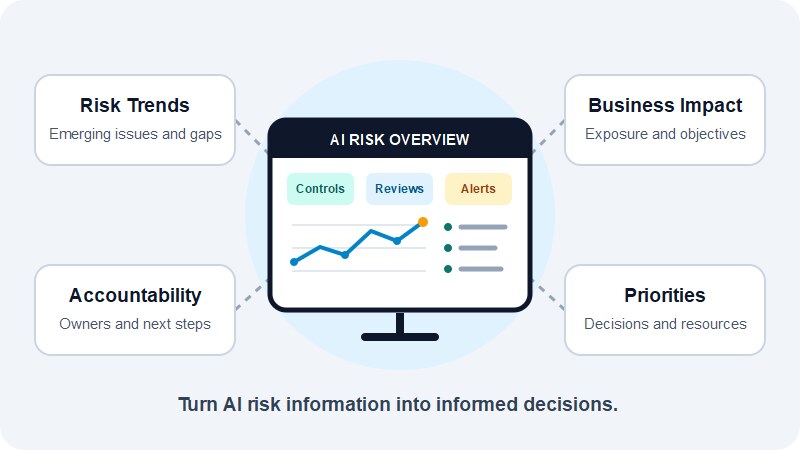
Executive insight translates AI project risks, performance metrics, and governance findings into clear information for business leaders and decision-makers. It highlights emerging threats, control gaps, business impact, and decisions that require leadership attention. Bringing together AI risk assessments, compliance updates, and accountable owners helps executives prioritize resources and evaluate whether risks align with organizational risk appetite. Effective executive reporting supports informed decisions, strategic oversight, and responsible AI investment.
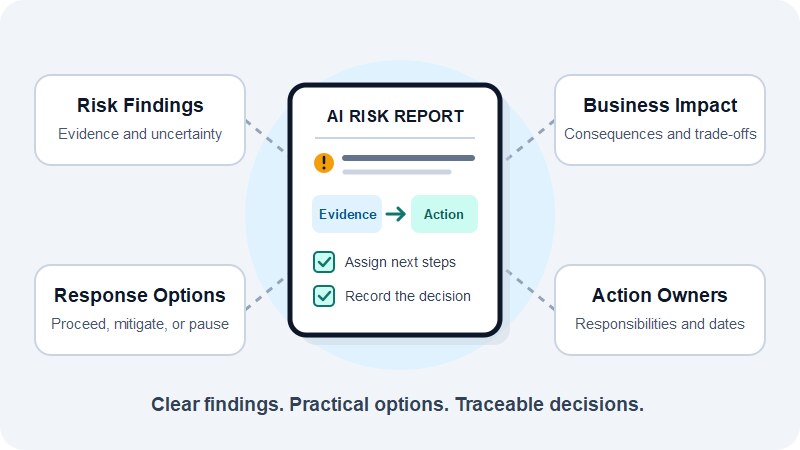
Decision-Oriented Reports
AI Project Risk decision-oriented reports translate AI risk assessments into clear findings, prioritized recommendations, and practical next steps. They connect identified risks to business impact, available evidence, and response options, helping stakeholders decide whether to proceed, mitigate, pause, or escalate an AI project. Effective AI risk reporting identifies accountable owners, timelines, and uncertainties so leaders can weigh trade-offs and allocate resources. This approach strengthens AI governance by making decisions transparent, actionable, and traceable.
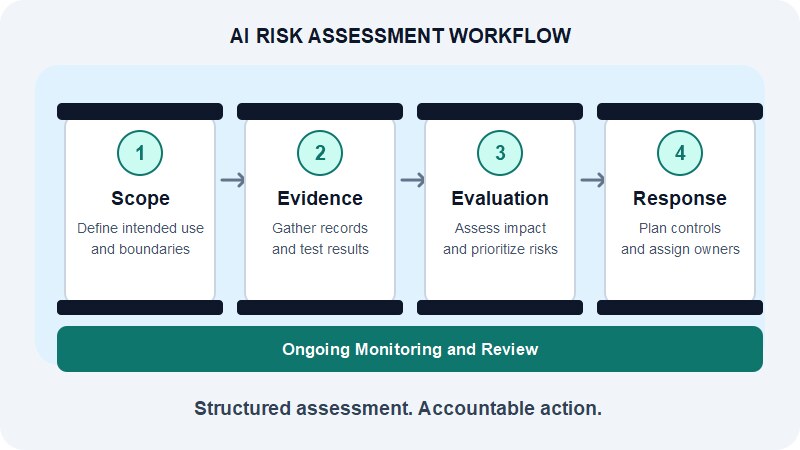
Assessment Workflow Pillars
AI risk assessment workflow pillars are the core stages of a structured review: defining scope, gathering evidence, evaluating risks, and planning responses. Each stage helps teams examine governance, data, models, security, and regulatory requirements in the context of an AI system’s intended use. Clear assessment criteria, documented findings, and accountable owners support consistent risk prioritization and informed decisions. Reviewing controls and reassessing risks as conditions change keeps AI risk management active throughout the project lifecycle.
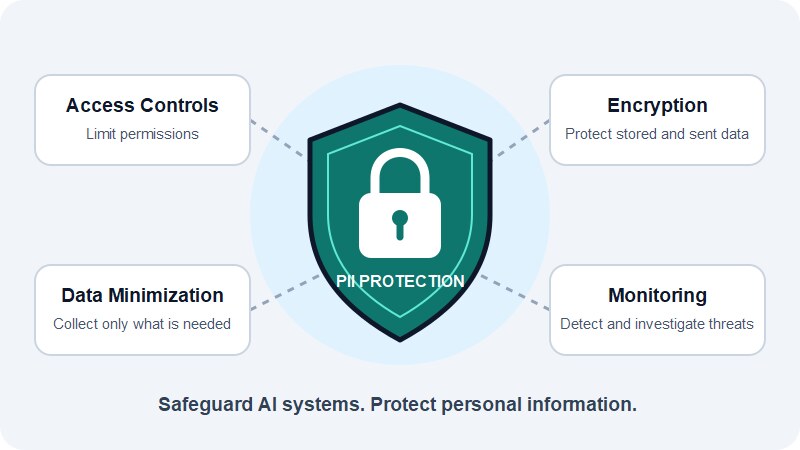
Security and PII Protection
AIProject Risk security and personally identifiable information (PII) protection focuses on safeguarding AI systems and confidential information that can identify an individual. Key risks include unauthorized access, sensitive data leakage, prompt injection, and the exposure of personal information through model outputs or connected tools. Data minimization, encryption, least-privilege access, and appropriate retention controls help reduce exposure throughout the AI project lifecycle. Regular security assessments and monitoring support incident response, privacy compliance, and responsible handling of personal data.

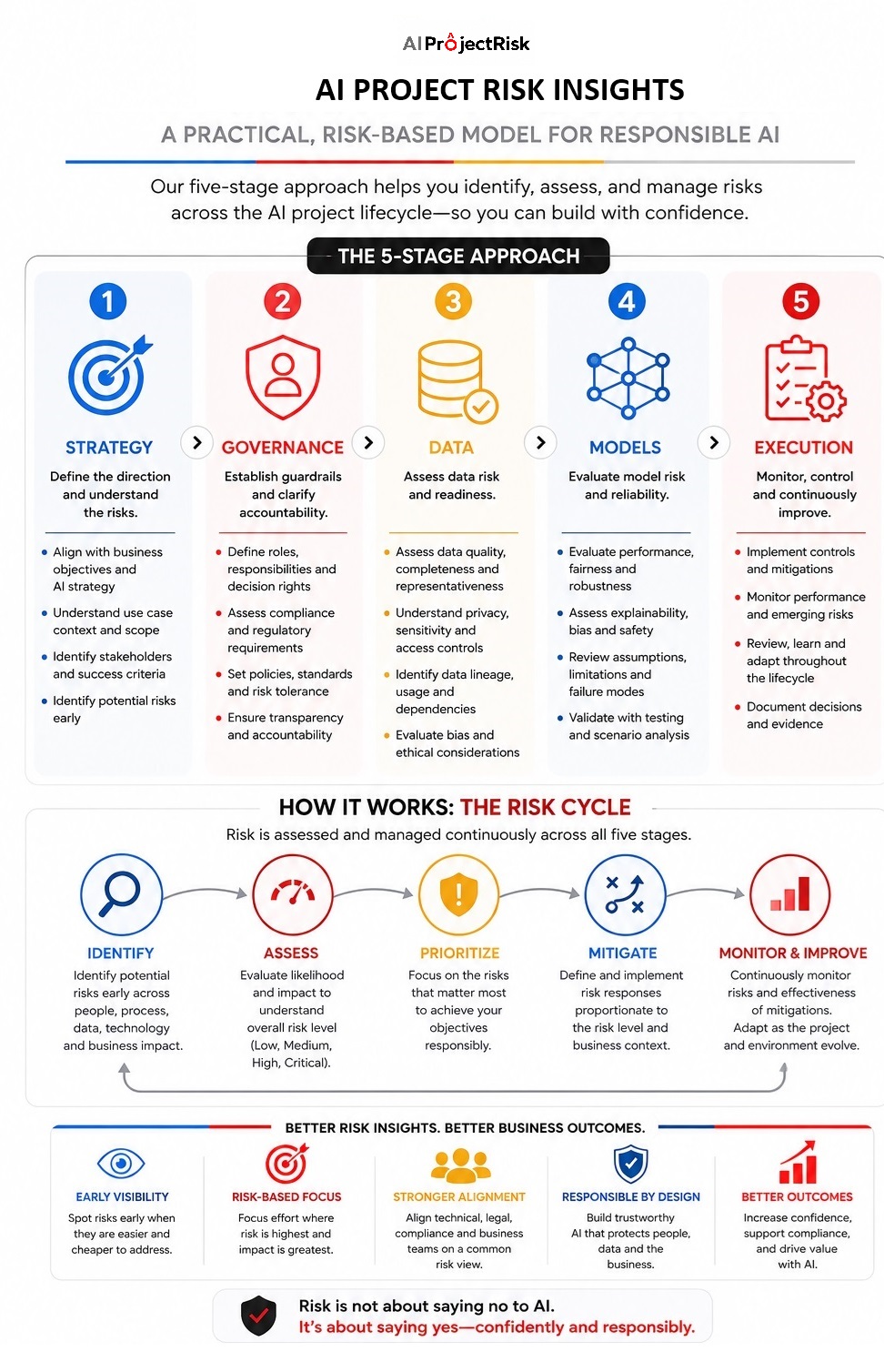
AI transformation projects fail when readiness, governance, data, models, and execution cannot keep pace with AI change. WorkforceAI gives leaders the AI risk visibility, readiness insight, and early-warning signals needed to avoid costly failures.
WorkforceAI analyzes strategy, governance, data, models, and execution to identify weaknesses across each stage and alert leaders before gaps threaten outcomes.
By treating AI as a teammate—not just a tool—organizations can combine technical expertise, domain knowledge, governance, and change leadership to reduce risk.
WorkforceAI helps leaders and managers guide active AI initiatives with visibility, speed, confidence, and reduced risk.
Request an Executive Briefing
If your fund or portfolio company has active AI projects that may affect value creation, risk exposure, diligence readiness, or regulated operations, AI Project Risk can provide a focused assessment of current exposure and remediation priorities.
Request an executive briefing to discuss AI project risk assessment for private equity and portfolio companies.
What Team Managers Say

Doug Stewart - Marketing Manager, 321 Gang Inc.

Fuad Khan - CEO, Twelvedot.com

Idrees Ali - Business Strategy Consultant

Nabil Duale - Network & Security Specialist, Canadian Blood Services

Peter Brown - Global Workforce Leader, Partner, PwC UK

René Janssen - Founder & CEO, Lepaya

Kim Morick - IBM’s Global HR Technology Leader
Location
Our mailing address:
1956 Robertson RoadSuite 201
Ottawa, Ontario
Canada K2H 5B9
Contact Us
Location
Our mailing address :
1956 Robertson Road
Suit 201
Ottawa, Ontario
Canada K2H 5B9